
1st Nov, 2026
Island Peak Climbing Route: From Chhukung to the 6,189m Summit
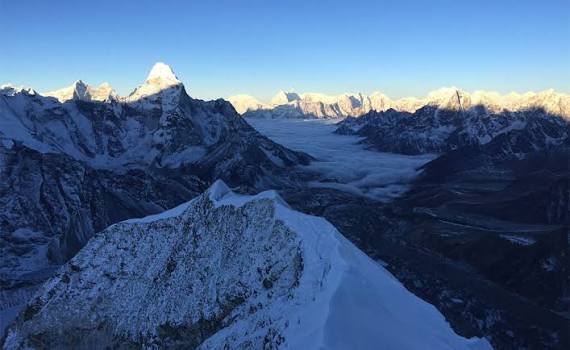
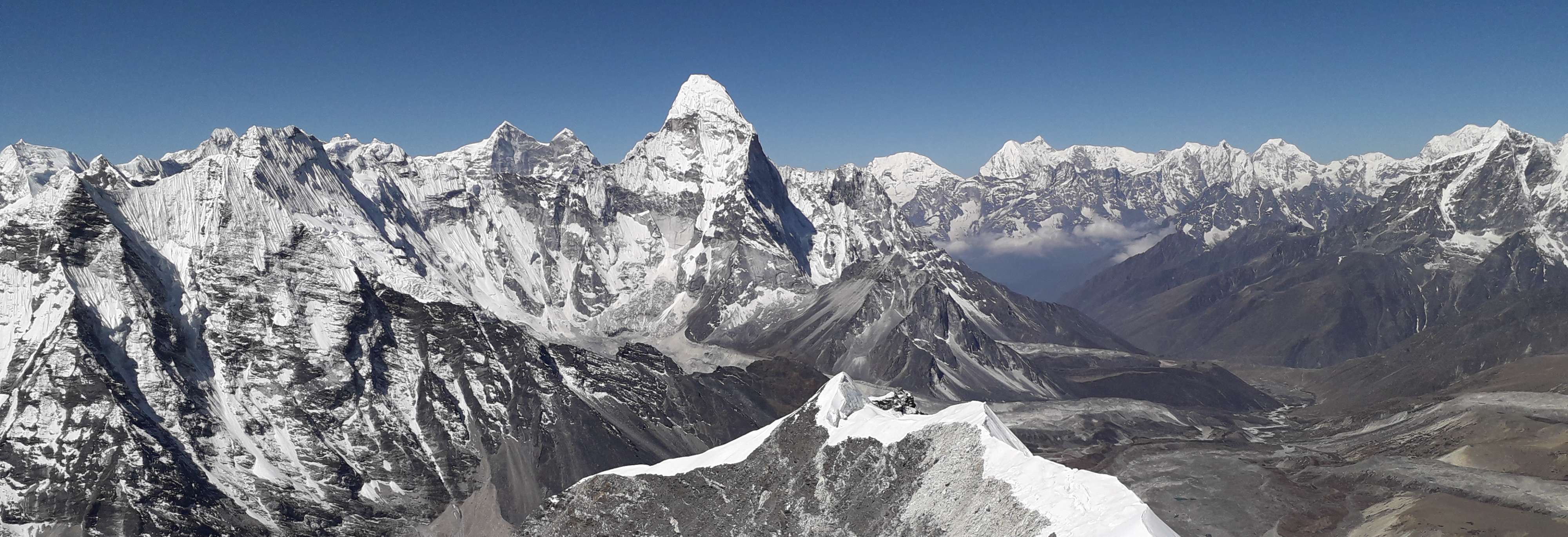
Island Peak, also known as Imja Tse, is one of Nepal’s most popular climbing peaks. It sits in the heart of the Khumbu region, surrounded by giants like Lhotse, Nuptse, and Ama Dablam. At 6,189 m, it offers a real taste of Himalayan mountaineering without the extreme demands of an 8,000 m peak.
Table of Contents
This guide follows the full route from Chhukung to the summit, including the trek in, camps, summit day, technical sections, and practical planning. For the full itinerary, inclusions, and departure dates, visit the Island Peak Climbing page.
Where Is Island Peak Located in Nepal?
Island Peak lies in the Khumbu region of eastern Nepal, inside Sagarmatha National Park. It rises above the Imja Valley, just beyond the village of Chhukung (4,730 m), south of the Lhotse and Nuptse massifs.
The peak was named “Island Peak” in 1951 by Eric Shipton’s expedition because it looks like an island in a sea of ice when seen from Dingboche. It is also the usual training peak for Everest expeditions, which says a lot about the quality of the climb.
Most climbers fly from Kathmandu to Lukla (2,860 m) and walk to Chhukung, often combining the climb with the Everest Base Camp trek.
Island Peak Climbing Route: An Overview
The route has four main stages:
- Trek to Chhukung: Fly to Lukla, then trek through Phakding, Namche Bazaar, Tengboche, and Dingboche to reach Chhukung.
- Base camp: Walk from Chhukung to Island Peak Base Camp (about 5,087 m).
- High camp (optional): Climb to a high camp at roughly 5,600 m on some itineraries.
- Summit push: Climb the rocky headwall, cross the glacier, and follow the summit ridge to the top.
Total trip length is typically around 16 to 19 days, depending on whether you include the Everest Base Camp trek or take a direct route. The extra days improve acclimatization and give you buffer time for weather.
Trekking from Lukla to Chhukung
The trek in is more than a walk. It builds your acclimatization and conditions your legs for the climb.
Typical stages:
- Lukla to Phakding (2,610 m): An easy start through forest and villages.
- Phakding to Namche Bazaar (3,440 m): Steady climbing, with views of Thamserku and Kusum Kanguru.
- Namche acclimatization day: Short hikes above the village, such as to Everest View Hotel.
- Namche to Tengboche (3,860 m): A visit to the famous monastery, with views of Everest and Ama Dablam.
- Tengboche to Dingboche (4,410 m): The valley opens up, and Island Peak comes into view.
- Dingboche acclimatization day: A hike up Nangkartshang Ridge helps your body adapt.
- Dingboche to Chhukung (4,730 m): A short, scenic day below the Lhotse south face.
Take your time on this section. A slow, steady approach is the best protection against altitude problems later on.
Island Peak Base Camp and High Camp
Island Peak Base Camp (about 5,087 m)
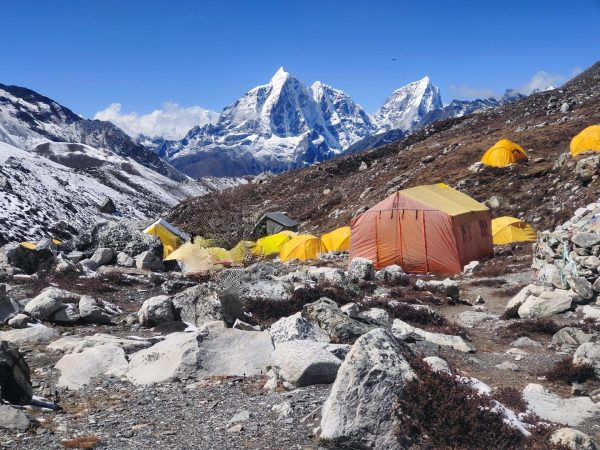
Base camp sits in a rocky valley, reached from Chhukung in around 4 to 5 hours. The camp is basic, with tents, a dining area, and a cold night. Your guide will usually run a gear check, a short training session, and a practice session on using crampons, harness, and ascender.
High Camp (about 5,600 m)
Some itineraries add a high camp near the base of the technical section. The advantage is a shorter, less exhausting summit day. The disadvantages are a colder, more exposed camp and an extra day of effort at altitude.
Both approaches work. The right choice depends on the group’s fitness, the season’s conditions, and the leader’s judgment.
Island Peak Summit Day: Route and Climbing Experience
Summit day is a long, demanding push that usually starts between midnight and 2:00 AM, in darkness and cold.
Stage 1: Rocky Ridge and Scramble
You climb steep rocky terrain by headlamp. The route requires careful footing and some hand use. This section sets the pace for the day.
Stage 2: The Headwall
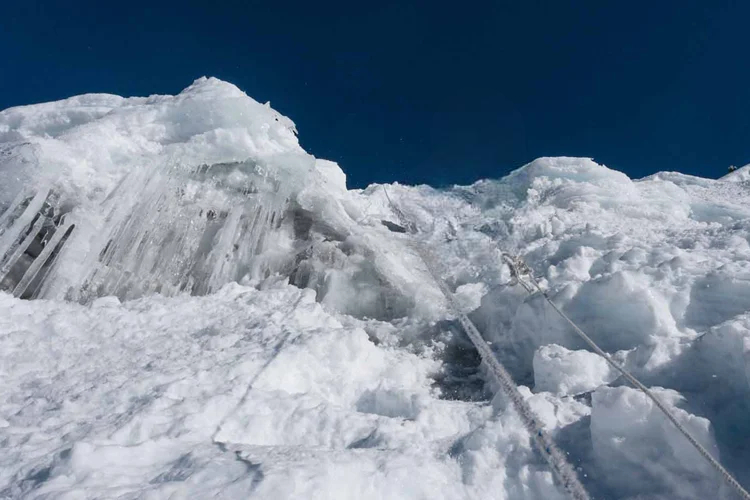
At the base of the glacier, a steep snow-and-ice wall of roughly 100 m rises ahead, at around 45 to 50 degrees. Guides typically fix ropes here, and climbers use an ascender (jumar) with their harness and crampons.
Stage 3: Glacier Crossing
A broad glacier leads toward the summit ridge. Crevasses may need to be crossed with ladders or careful routefinding, and your guide will rope the group where needed.
Stage 4: Summit Ridge
A narrow snow-and-ice ridge, with exposure on both sides, leads to the top. The views take in Lhotse, Makalu, Baruntse, Ama Dablam, and the Imja Valley.
Stage 5: Descent
After a short summit celebration, you return along the same route, often with abseils on the steeper sections, and continue to base camp or Chhukung.
The round trip commonly takes 8 to 12 hours from high camp, and a bit more from base camp. Weather and conditions can change the plan, and turning around is always an option.
Island Peak Altitude and Technical Sections
- Summit altitude: 6,189 m (about 20,305 ft)
- Grade: Commonly considered a moderately technical climb, typically around PD+ on the alpine scale
- Technical sections: The headwall, crevasse crossings, and the summit ridge
Technical skills needed: wearing crampons, using an ice axe, climbing on fixed lines, and abseiling. Most are taught at base camp. The main difficulty is the combination of altitude, cold, and a long summit day, not the technical grade alone.
Best Season for Island Peak Climbing
Spring (April to May): Stable weather, warmer days, and good snow conditions. This is a popular season.
Autumn (late September to November): Clear skies and excellent visibility, but colder nights and busy trails. Many climbers prefer October.
Winter (December to February): Extremely cold, windy, and challenging. Only experienced climbers should consider it.
Monsoon (June to August): Cloud, rain, and unstable conditions. Not recommended.
For most climbers, late April to May and October to early November offer the best chance of a safe summit.
Essential Climbing Equipment and Preparation
Technical gear:
- Mountaineering boots (double or insulated)
- Crampons, ice axe, and helmet
- Climbing harness and carabiners
- Ascender and belay device
- Trekking poles for the approach
Clothing:
- Down jacket and insulated layers
- Windproof and waterproof shell
- Warm gloves and mitts
- Thermal base layers and wool socks
- Warm hat, buff, and glacier glasses
Other essentials:
- A sleeping bag rated to at least -20°C
- A headlamp with spare batteries
- A personal first aid kit and water purification
- Sunscreen and lip balm with high SPF
Much of the technical equipment can be rented in Kathmandu or Namche. Confirm what is included in your package on the trip page.
Preparation:
- Train for 8 to 12 weeks with cardio, leg strength, and weighted hikes
- Practice on stairs or hills with a loaded pack
- Try crampons and ice axe use on a short course if you can
- Book a medical check-up before departure
Island Peak Climbing Permits and Cost
Climbing Island Peak requires several permits:
- Nepal Mountaineering Association (NMA) climbing permit: Fees vary by season and are highest in spring and autumn.
- Sagarmatha National Park entry permit
- Local municipality entry permit for the Khumbu region
Permit fees change, so check the current rates before booking. Your operator usually arranges them.
Your total cost depends on:
- Group size and season
- Length of the itinerary
- Guide, climbing Sherpa, and porter arrangements
- Equipment rental and flights
- Meals and accommodation
Travel insurance covering climbing up to 6,500 m and helicopter evacuation is essential.
Frequently Asked Questions (FAQs)
1. How high is Island Peak?
Island Peak is 6,189 m (about 20,305 ft) above sea level.
2. Is Island Peak difficult?
It is a moderately difficult climb. The altitude, the headwall, and the long summit day are the main challenges.
3. Do I need prior climbing experience?
It is helpful but not always essential. With good fitness and a short skills session at base camp, many fit trekkers succeed.
4. How long does the Island Peak climb take?
Most itineraries last around 16 to 19 days, including acclimatization.
5. How many hours is summit day?
Typically 8 to 12 hours round trip from high camp, and longer from base camp.
6. When is the best time to climb Island Peak?
Late April to May and October to early November are the most reliable windows.
7. Do I need a guide?
Yes. A licensed guide and climbing support are strongly recommended and are normally required for safety and logistics.
8. Can I rent climbing equipment?
Yes. Most technical gear can be rented in Kathmandu or Namche Bazaar.
9. Is altitude sickness a risk?
Yes. A gradual ascent, hydration, and acclimatization days reduce the risk. Descend if serious symptoms appear.
10. Can I combine Island Peak with the Everest Base Camp trek?
Yes. This is a popular option because the trek in gives excellent acclimatization before the climb.
Final Thoughts
Island Peak combines a classic Khumbu trek with a real mountaineering challenge. The route from Chhukung to the summit is steep, cold, and demanding, but also achievable with good preparation, a gradual schedule, and an experienced team.
If you are ready to climb, explore the full itinerary and book your trip here: Island Peak Climbing.
Recent From Island Peak Climbing Route: From Chhukung to the 6,189m Summit
Jun 27, 2022
Jun 27, 2022

Jul 19, 2022
Sep 20, 2025
Jan 03, 2023
Feb 03, 2023
Feb 17, 2023
Feb 23, 2023
Mar 03, 2023
Mar 14, 2023
Mar 20, 2023
Mar 28, 2023
Apr 06, 2023
Jul 31, 2023
Aug 28, 2023

Jan 04, 2026


Mar 10, 2026
Mar 10, 2026



Apr 03, 2026
Sep 10, 2026
Sep 14, 2026
Sep 23, 2026
Sep 23, 2026
Oct 05, 2026
Oct 06, 2026