11th Sep, 2026
Everest Three High Passes Trek Altitude & Elevation Guide
Table of Contents
The Everest Three High Passes Trek is the ultimate test of the Khumbu region — a demanding 18-day loop that crosses not one but three separate mountain passes above 5,400 meters, while also taking in Everest Base Camp, Kala Patthar, and the Gokyo Lakes along the way. This isn't a trek for a first Himalayan outing; it's the route experienced trekkers graduate to once the standard Everest Base Camp trail no longer feels like enough of a challenge.
The Everest Three High Passes Trek altitude reaches its highest point at Kongma La Pass, 5,535 meters (18,159 ft), the most remote and technically demanding of the three crossings. The other two passes — Cho La (5,420 m / 17,782 ft) and Renjo La (5,465 m / 17,930 ft) — sit only slightly lower, meaning trekkers spend the better part of two weeks living, sleeping, and hiking above 4,000 meters. At these heights, oxygen levels sit at roughly half of what's available at sea level.
What makes this trek distinct from a standard Everest Base Camp itinerary isn't a single big climb — it's the sheer accumulation of high-altitude days. Where most treks in the region ask the body to adjust once or twice, the Three Passes route asks it to do so repeatedly: Kongma La first, then Everest Base Camp and Kala Patthar, then Cho La, then a rest day at Gokyo, and finally Renjo La, before the long descent back to Lukla. Each pass demands its own pre-dawn start, its own careful pacing, and its own respect for how quickly conditions can change above 5,000 meters.
This guide breaks down exactly where the elevation climbs fastest across all three passes, where altitude sickness risk peaks, and how to prepare for what is genuinely one of the most physically demanding standard treks in Nepal.
What Is the Highest Point on the Everest Three High Passes Trek?
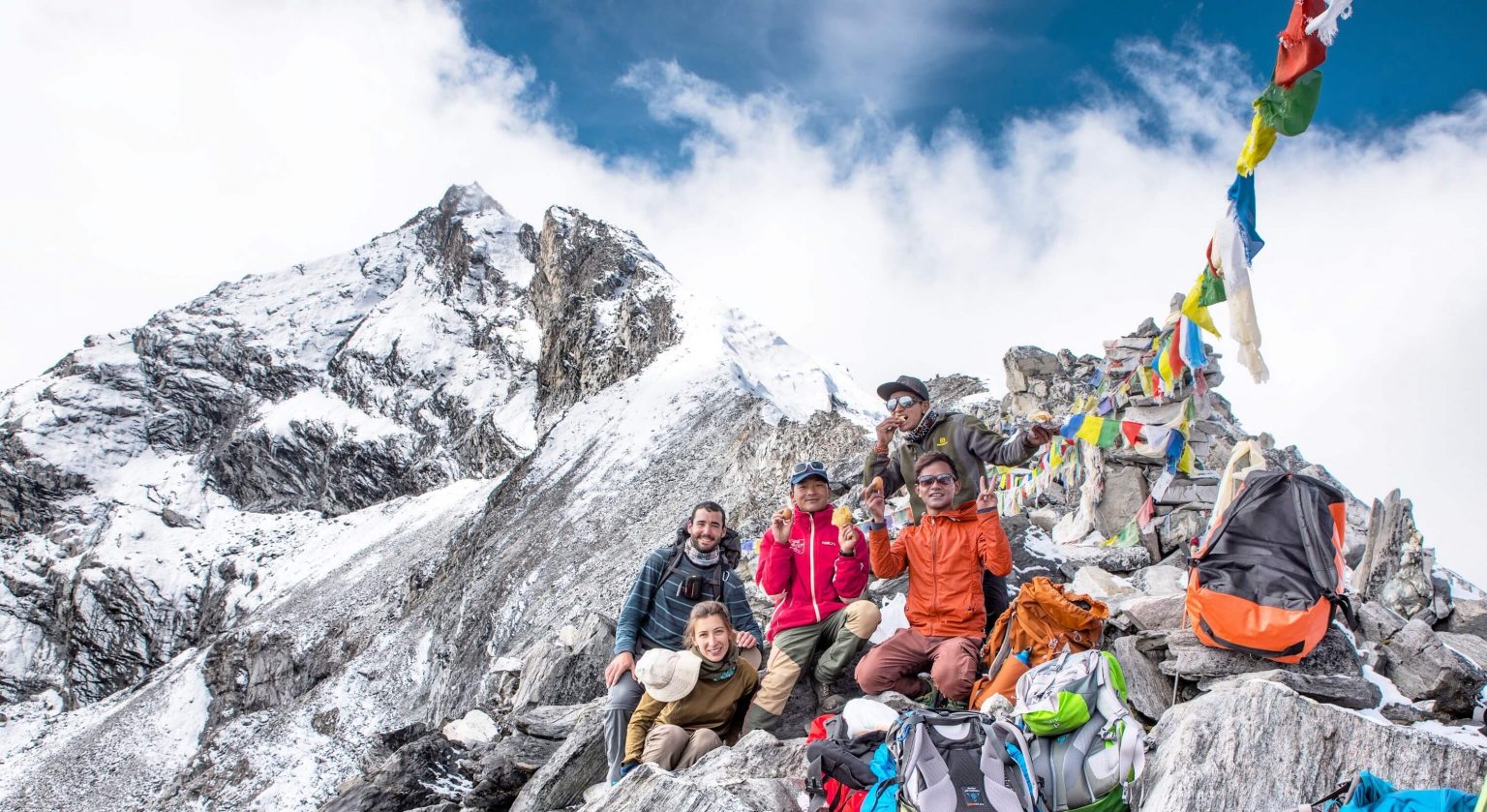
The highest point on the route is Kongma La Pass, at 5,535 meters (18,159 feet), crossed early in most itineraries between Chhukung and Lobuche. It's widely considered the most remote and technically challenging of the three passes, involving a long ascent over loose moraine and glacial terrain with dramatic views of Lhotse and Makalu against striking turquoise alpine lakes.
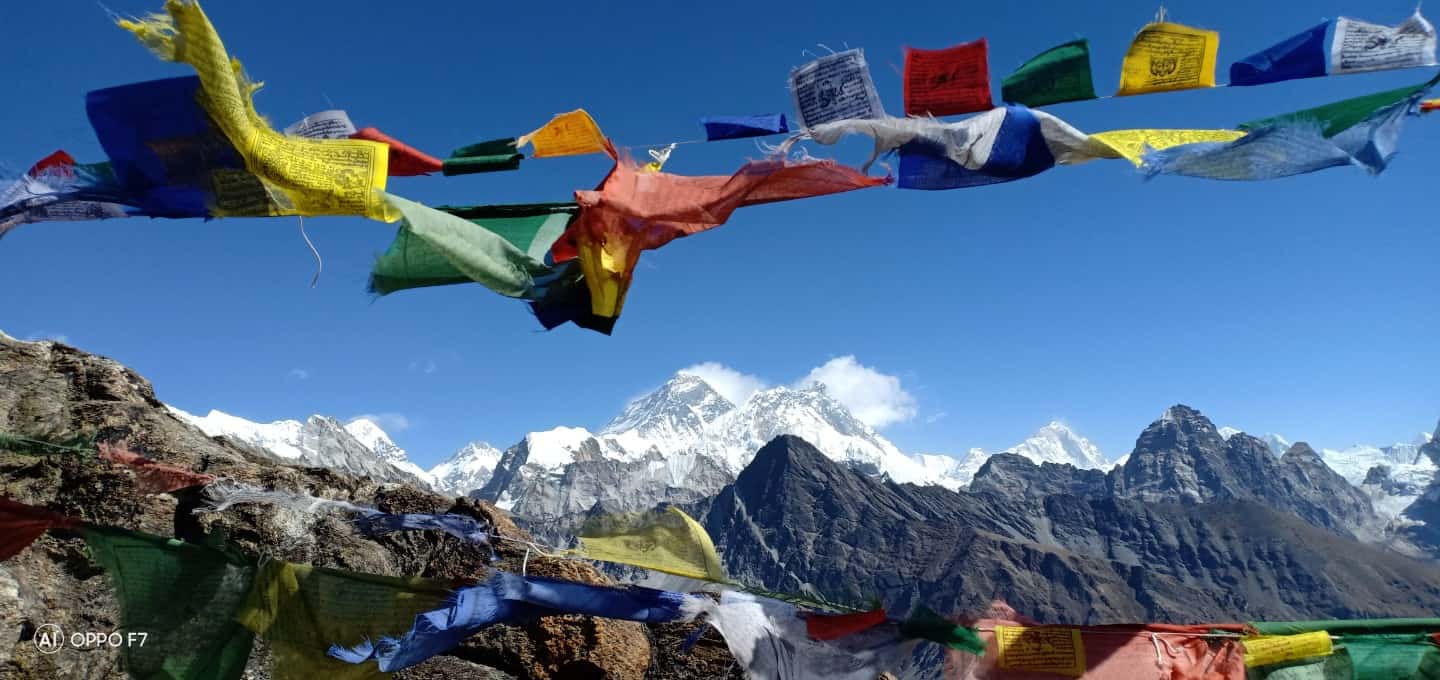
The other two passes come close behind: Renjo La (5,465 m / 17,930 ft), often rated by trekkers as offering the single best panoramic viewpoint in the entire Khumbu — arguably surpassing even Kala Patthar — with sweeping views of Everest, Lhotse, and the Gokyo Lakes spread out below; and Cho La (5,420 m / 17,782 ft), a steep, icy crossing between Dzongla and the Gokyo side of the valley, flanked by Cholatse and views toward Ama Dablam.
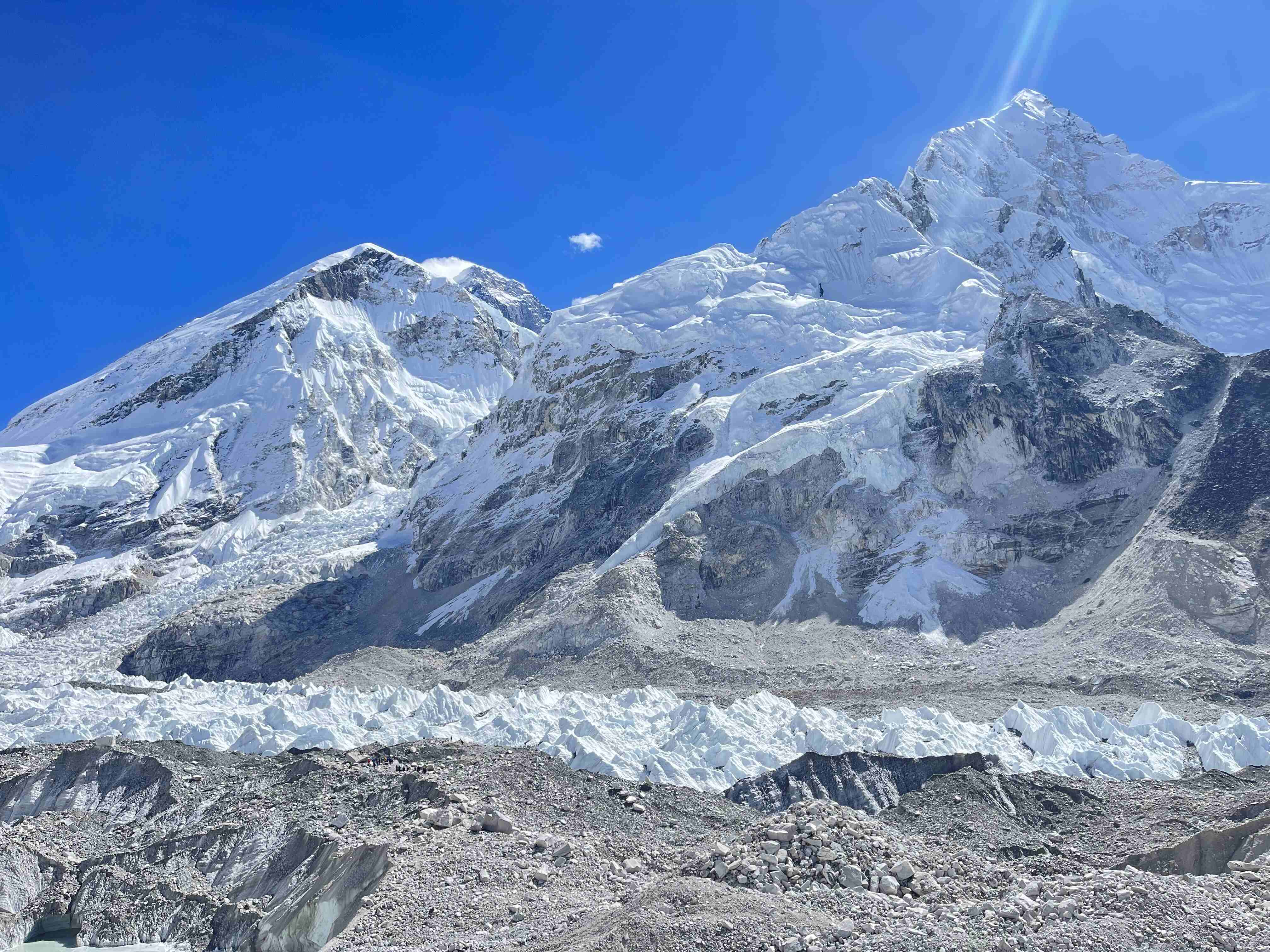
The trek also includes Everest Base Camp (5,364 m) and the pre-dawn climb to Kala Patthar (5,545 m) — meaning that, depending on the exact itinerary, trekkers may actually stand slightly higher on Kala Patthar than on any of the three named passes. What sets this trek apart isn't one single altitude record, though — it's the combination of five separate points above 5,300 meters within roughly two weeks of trekking.
Everest Three High Passes Trek Elevation Profile
A standard itinerary begins with the flight from Kathmandu to Lukla, follows the Dudh Koshi valley to Namche Bazaar and Tengboche, then branches toward Dingboche and Chhukung for the first pass crossing before looping through Everest Base Camp, Cho La, Gokyo, and Renjo La. Here's the elevation profile of the key stops along the route:
| Location | Altitude (Meters) | Altitude (Feet) | Notes |
|---|---|---|---|
| Kathmandu | 1,400 | 4,593 | Arrival point before the flight to Lukla. |
| Lukla | 2,860 | 9,383 | Trek starts and ends here. |
| Namche Bazaar | 3,440 | 11,286 | First major acclimatization stop. |
| Tengboche | 3,857 | 12,654 | Home to the Khumbu's largest monastery. |
| Dingboche | 4,400 | 14,435 | Second acclimatization stop. |
| Chhukung | 4,730 | 15,518 | Staging village for the Kongma La approach. |
| Kongma La Pass | 5,535 | 18,159 | Highest and most remote of the three passes. |
| Lobuche | 4,950 | 16,240 | Rejoins the classic Everest Base Camp trail. |
| Gorak Shep | 5,164 | 16,942 | Base for Everest Base Camp and Kala Patthar. |
| Everest Base Camp | 5,364 | 17,598 | Foot of the Khumbu Icefall. |
| Kala Patthar | 5,545 | 18,192 | Highest single point reached on the trek. |
| Dzongla | 4,830 | 15,846 | Staging point for the Cho La crossing. |
| Cho La Pass | 5,420 | 17,782 | Second of the three high passes. |
| Gokyo | 4,700 | 15,419 | Base for the Gokyo Lakes and rest day. |
| Renjo La Pass | 5,465 | 17,930 | Third and final high pass. |
| Lungden | 4,368 | 14,330 | First stop after descending Renjo La. |
Day-by-Day Elevation Gain on the Everest Three High Passes Trek
Elevation on this route climbs and falls repeatedly across three separate high-altitude pushes, rather than one single approach. The table below reflects a standard 17–18 day itinerary starting and ending in Kathmandu.
| Day | Trekking Route | Elevation | Net Elevation Change |
|---|---|---|---|
| Day 1 | Arrival in Kathmandu | 1,400 m | — |
| Day 2 | Fly to Lukla, trek to Phakding | 2,860 m | +1,460 m (mostly by air) |
| Day 3 | Trek to Namche Bazaar | 3,440 m | +580 m |
| Day 4 | Acclimatization in Namche (day hike to Everest View Hotel) | 3,440 m | 0 m (day hike higher) |
| Day 5 | Trek to Tengboche | 3,857 m | +417 m |
| Day 6 | Trek to Dingboche | 4,400 m | +543 m |
| Day 7 | Acclimatization in Dingboche (day hike to Nagarjun Hill) | 4,400 m | 0 m (day hike to ~5,100 m) |
| Day 8 | Trek to Chhukung | 4,730 m | +330 m |
| Day 9 | Cross Kongma La to Lobuche | Pass: 5,535 m Lobuche: 4,950 m | +805 m to pass; -585 m to Lobuche |
| Day 10 | Trek to Gorak Shep, hike to Everest Base Camp | 5,164 m / 5,364 m | +214 m, then +200 m round trip |
| Day 11 | Hike to Kala Patthar, trek via Lobuche to Dzongla | 5,545 m → 4,830 m | +381 m to summit, then -715 m net |
| Day 12 | Cross Cho La to Thangnak/Gokyo | Pass: 5,420 m Gokyo: 4,700 m | +590 m to pass; -720 m to Gokyo |
| Day 13 | Rest day at Gokyo (Gokyo Ri side hike) | 4,700 m | 0 m (day hike to ~5,357 m) |
| Day 14 | Cross Renjo La to Lungden | Pass: 5,465 m Lungden: 4,368 m | +765 m to pass; -1,097 m to Lungden |
| Day 15 | Trek to Namche Bazaar | 3,440 m | -928 m |
| Day 16 | Trek to Lukla | 2,860 m | -580 m |
| Day 17 | Fly back to Kathmandu | 1,400 m | -1,460 m (by air) |
Everest Three High Passes Altitude Compared to Everest Base Camp and Annapurna Circuit
Trekkers weighing this route against a standard Everest Base Camp trek or the Annapurna Circuit will find it in a different league entirely — not because any single point is dramatically higher, but because of how many high points the itinerary strings together.
| Point | Everest Three High Passes Trek | Everest Base Camp Trek | Annapurna Circuit Trek |
|---|---|---|---|
| Highest Point | 5,545 m (18,192 ft) at Kala Patthar | 5,545 m (18,192 ft) at Kala Patthar | 5,416 m (17,769 ft) at Thorong La |
| Highest Pass Crossing | 5,535 m (18,159 ft) at Kongma La | — (no pass crossing) | 5,416 m (17,769 ft) at Thorong La |
| Number of Passes Above 5,400 m | Three (Kongma La, Cho La, Renjo La) | Zero | One |
| Trek Duration | 18–21 days | 12–15 days | 12–16 days |
| Acclimatization | Namche and Dingboche, plus a Gokyo rest day | Namche and Dingboche | One rest day in Manang |
| Oxygen Level (approx.) | Roughly 50% of sea level | Roughly 50% of sea level | Roughly 50% of sea level |
| Altitude Sickness Risk | Very high, sustained across multiple pass-crossing days | High, spread across several high nights | High, concentrated on pass-crossing day |
| Recommended For | Experienced high-altitude trekkers | First-time Himalayan trekkers welcome | Trekkers comfortable with one long pass day |
The defining difference is repetition. A trekker doing Everest Base Camp faces one real test — the Kala Patthar morning. A trekker on the Annapurna Circuit faces one demanding pass-crossing day at Thorong La. The Three Passes trek asks for three of those days, each above 5,400 meters, spread across a two-and-a-half week itinerary — which is exactly why it's considered one of the hardest standard treks in Nepal.
How Does This Trek Compare to Other Himalayan Routes?
Individually, each of the three passes on this route sits at the very top of Nepal's altitude scale, alongside the region's other major extreme-altitude treks.
| Trek / Pass | Highest Point | Difference from Kongma La (5,535 m) | Altitude Category |
|---|---|---|---|
| Kongma La (this trek) | 5,535 m | — | Extreme |
| Poon Hill | 3,210 m | -2,325 m | Beginner |
| Annapurna Base Camp | 4,130 m | -1,405 m | Moderate |
| Langtang (Tserko Ri) | 4,984 m | -551 m | Very High |
| Manaslu Circuit (Larkya La) | 5,160 m | -375 m | Extreme |
| Kanchenjunga Base Camp | Approx. 5,140 m | -395 m | Extreme |
| Cho La Pass (this trek) | 5,420 m | -115 m | Extreme |
| Annapurna Circuit (Thorong La) | 5,416 m | -119 m | Extreme |
| Renjo La (this trek) | 5,465 m | -70 m | Extreme |
| Everest Base Camp | 5,364 m | -171 m | Extreme |
| Kala Patthar (this trek) | 5,545 m | +10 m | Extreme |
No other standard trekking route in Nepal packs this many extreme-altitude crossings into one continuous itinerary. Trekkers who've already completed a single high pass elsewhere — Thorong La on the Annapurna Circuit, or Larkya La on the Manaslu Circuit — will recognize the individual difficulty of each crossing here, but the cumulative demand of doing three of them, plus Everest Base Camp and Kala Patthar, is what puts this trek in a category of its own.
Does Altitude Sickness Affect the Everest Three High Passes Trek?
Yes — more so than almost any other standard trek in Nepal, given how many days this route spends above 4,700 meters. Trekkers cross above 5,400 meters on three separate occasions and sleep above 4,700 meters for well over a week, creating sustained and repeated exposure to genuinely thin air. This puts everyone at meaningful risk of Acute Mountain Sickness (AMS), and the risk doesn't fully subside between passes the way it might on a trek with just one high point.
Risk climbs steadily from Dingboche onward and stays elevated through Chhukung, the Kongma La crossing, Gorak Shep, Dzongla, Cho La, and Renjo La in turn. Common symptoms include headache, nausea, dizziness, fatigue, loss of appetite, and poor sleep. Left unaddressed, these can progress toward High-Altitude Pulmonary Edema (HAPE) or High-Altitude Cerebral Edema (HACE), both of which require immediate descent — a genuine logistical challenge on the more remote sections between passes.
Fitness alone doesn't prevent AMS — strong trekkers sometimes get into trouble precisely because they're capable of moving fast, which raises risk rather than lowering it. Ascent rate, rest days, hydration, and honest symptom-awareness matter far more than gym fitness. Because sections of this route (particularly around Kongma La and the Cho La–Gokyo stretch) are more remote than the main Everest Base Camp trail, comprehensive travel insurance covering high-altitude helicopter evacuation to at least 5,500 meters is essential, not optional.
Everest Three High Passes Acclimatization
A properly built itinerary includes acclimatization stops at Namche Bazaar (3,440 m) and Dingboche (4,400 m), plus a dedicated rest day at Gokyo (4,700 m) before the final Renjo La crossing. On each rest day, trekkers hike higher — to the Everest View Hotel above Namche, Nagarjun Hill above Dingboche, or Gokyo Ri above the lakes — before returning to sleep lower, following the standard "climb high, sleep low" principle.
Because this trek involves three separate pass crossings rather than one, acclimatization has to work throughout the entire itinerary, not just in the first week. The days immediately following each pass (Lobuche after Kongma La, Dzongla before Cho La, and Lungden after Renjo La) matter almost as much as the dedicated rest days themselves, since they give the body recovery time between demanding pushes.
Each pass crossing is typically tackled with a pre-dawn start to avoid the afternoon winds that build over exposed terrain above 5,000 meters. If you'd like extra buffer built into your schedule — genuinely useful on a trek this demanding — Northern Trekking Team can customize your Everest Three High Passes Trek itinerary with additional acclimatization days around Namche, Dingboche, or Gokyo.
How Difficult Is the Everest Three High Passes Trek Because of Altitude?
This trek is graded hard, and its extended, repeated exposure to extreme altitude is the central reason why:
- Kongma La, Cho La, and Renjo La all sit above 5,400 meters, where oxygen levels are roughly half of sea level — and trekkers cross all three within a two-and-a-half week window.
- Trekking days routinely run 7–9 hours, with pass-crossing days often extending to 8–9 hours over glacier, moraine, and exposed ridgelines.
- Altitude sickness risk stays elevated for far longer than on a single-pass trek, since the body barely finishes adjusting to one high point before facing the next.
- Kongma La in particular involves loose moraine and glacial terrain that's more technically involved underfoot than a standard trekking trail, though no ropes or technical climbing gear are required.
- Overnight temperatures at Chhukung, Gorak Shep, Dzongla, and Lungden regularly drop well below freezing, making proper cold-weather gear essential throughout.
- Prior high-altitude trekking experience is genuinely important here — this is not recommended as a first Himalayan trek.
- Weather above 5,000 meters can shift quickly; pre-dawn starts on each pass day are standard practice to avoid deteriorating afternoon conditions.
Fit, experienced trekkers with the right guide and a properly paced itinerary can complete this trek safely and successfully, but it remains one of the most demanding standard treks in Nepal — the difficulty comes from the accumulation of high days, not any single crossing.
How to Prepare for Everest Three High Passes Altitude
No technical climbing skills are required, but this trek rewards genuine prior high-altitude experience and strong physical preparation more than almost any other standard route in the Khumbu.
- Build serious cardiovascular fitness: Start training months in advance with hiking, walking, stair climbing, and cycling, paired with leg and core strength work for the long, repeated ascents and descents across three passes.
- Gain prior high-altitude experience first: Trekkers who've already completed a route above 4,500 meters — Annapurna Base Camp, Manaslu, or a standard Everest Base Camp trek — tend to acclimatize far more confidently on this route.
- Ascend at a steady pace throughout: Avoid rushing at any stage, since fatigue compounds across three separate high-altitude pushes rather than resetting after one.
- Stay hydrated: Aim for 3–4 liters of water a day, more on pass-crossing days, with purification tablets or a filter as backup.
- Get proper rest between passes: Treat the days at Lobuche, Dzongla, and Gokyo as genuine recovery time, not just scenic stopovers.
- Know the symptoms of AMS and act on them early: Headache, nausea, dizziness, and poor sleep are early warning signs. Stop ascending and tell your guide immediately if they appear, on any of the three passes.
- Pack for genuine mountain pass conditions: Trekking poles, microspikes or similar traction gear, gaiters, and insulated gloves are essential, since all three passes can involve snow or ice depending on the season.
- Choose an itinerary with real buffer days: The extra days built around Namche, Dingboche, and Gokyo are what make three consecutive pass crossings manageable — never compress this itinerary to save time.
Everest Three High Passes Trek Altitude & Elevation Guide FAQs
1. What is the highest point on the Everest Three High Passes Trek?
Kongma La Pass, at 5,535 meters (18,159 feet), is the highest of the three named passes. Kala Patthar, also visited on the route, is slightly higher still at 5,545 meters, making it the single highest point most trekkers actually stand on.
2. What are the altitudes of all three passes?
Kongma La sits at 5,535 m (18,159 ft), Renjo La at 5,465 m (17,930 ft), and Cho La at 5,420 m (17,782 ft). All three are crossed within the same 17–21 day itinerary, along with Everest Base Camp and Kala Patthar.
3. What is the elevation gain on the Everest Three High Passes Trek?
Trekkers fly into Lukla at 2,860 meters and cross five separate points above 5,300 meters (three passes plus Base Camp and Kala Patthar) before returning to Kathmandu. Counting every ascent and descent across the full loop, cumulative elevation gain runs well beyond that of a standard Everest Base Camp trek.
4. At what altitude does altitude sickness risk begin on this trek?
AMS risk becomes meaningful above roughly 2,500–3,000 meters, from around Namche Bazaar onward. Given how many days this trek spends above 4,700 meters across three separate high pushes, risk stays elevated for a longer stretch of the itinerary than on most other treks in the region.
5. What is a safe daily elevation gain to avoid altitude sickness?
The standard guideline is no more than 300–500 meters of sleeping-elevation gain per day once above 3,000 meters. On this trek, that principle applies not just to the initial ascent but to the recovery periods between each pass crossing as well.
6. How many days does it take to cross the first pass, Kongma La, from Lukla?
Most standard itineraries take 8–9 days to reach Kongma La from Lukla, including acclimatization stops at Namche and Dingboche. Compressed itineraries exist but meaningfully raise altitude sickness risk on what is already the most technically demanding of the three passes.
7. Is the Everest Three High Passes Trek suitable for first-time trekkers?
Generally, no. This route is best suited to trekkers with prior experience above 4,000–4,500 meters. The combination of three separate 5,400+ meter crossings, long daily trekking hours, and remote terrain makes it considerably more demanding than a standard Everest Base Camp trek.
8. Which villages and passes are the key altitude checkpoints along the route?
The commonly cited elevation checkpoints, in a typical clockwise order, are:
- Lukla – 2,860 m (trek start)
- Namche Bazaar – 3,440 m (first acclimatization stop)
- Dingboche – 4,400 m (second acclimatization stop)
- Chhukung – 4,730 m
- Kongma La Pass – 5,535 m (highest pass)
- Everest Base Camp – 5,364 m
- Kala Patthar – 5,545 m (highest single point)
- Cho La Pass – 5,420 m
- Gokyo – 4,700 m (rest day)
- Renjo La Pass – 5,465 m (third pass)
9. Does altitude affect temperature on the Everest Three High Passes Trek?
Yes, significantly — temperature drops roughly 6–7°C for every 1,000 meters gained. On all three passes, pre-dawn crossing temperatures regularly fall well below freezing even in peak season, which is why layered clothing, insulated gloves, and a sleeping bag rated well below 0°C are considered essential rather than optional.
10. Can I skip acclimatization days if I'm already fit?
No. AMS is caused by insufficient time for the body to adjust to lower oxygen levels, not by cardiovascular fitness — and on a trek with three separate high-altitude pushes, skipping acclimatization compounds risk with every subsequent pass. The Namche, Dingboche, and Gokyo rest days should be treated as fixed, non-negotiable parts of the itinerary.
Conclusion
Between Kongma La at 5,535 meters, Renjo La at 5,465 meters, and Cho La at 5,420 meters — plus Everest Base Camp and Kala Patthar along the way — the Everest Three High Passes Trek's altitude is genuinely among the most demanding of any standard trekking route in Nepal. It's entirely achievable for trekkers with real prior high-altitude experience, solid fitness, and a properly paced itinerary that treats acclimatization as a continuous process rather than a one-time hurdle.
Few journeys in the Himalayas ask this much of the body while giving back this much in return: three genuine mountain pass crossings, the turquoise Gokyo Lakes, the classic Everest Base Camp trail, and some of the finest high-altitude panoramas anywhere on earth. Plan your Everest Three High Passes Trek with Northern Trekking Team for an itinerary built by local Khumbu guides around safe, sustained acclimatization — so you're ready for every pass, not just the first one.
Recent From Everest Three High Passes Trek Altitude & Elevation Guide
Jun 27, 2022
Jun 27, 2022

Jul 19, 2022
Sep 20, 2025
Jan 03, 2023
Feb 03, 2023
Feb 17, 2023
Feb 23, 2023
Mar 03, 2023
Mar 14, 2023
Mar 20, 2023
Mar 28, 2023
Apr 06, 2023
Jul 31, 2023
Aug 28, 2023

Jan 04, 2026


Mar 10, 2026
Mar 10, 2026