18th Sep, 2026
Annapurna Panorama Trek Cost, Permits, Difficulty & Best Season: Complete Guide
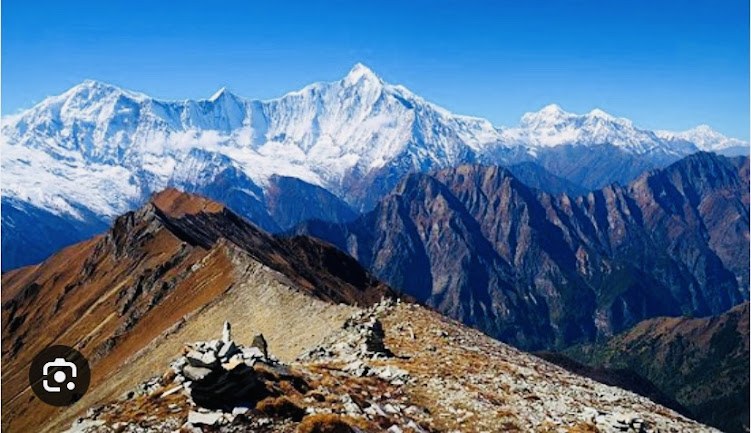
If you want a genuine taste of the Himalayas without committing weeks to a high-altitude expedition, the Annapurna Panorama Trek is one of the best short treks Nepal has to offer. Also known as the Ghorepani–Poon Hill Trek, this classic route takes you through dense rhododendron forests, traditional Gurung and Magar villages, and up to the iconic Poon Hill viewpoint for a sunrise panorama of Annapurna, Dhaulagiri, and Machhapuchhre. It's short, scenic, and achievable for nearly anyone with a reasonable level of fitness — which is exactly why it's one of Nepal's most popular treks. Here's everything you need to know before you go.
Table of Contents
What Is the Annapurna Panorama Trek?
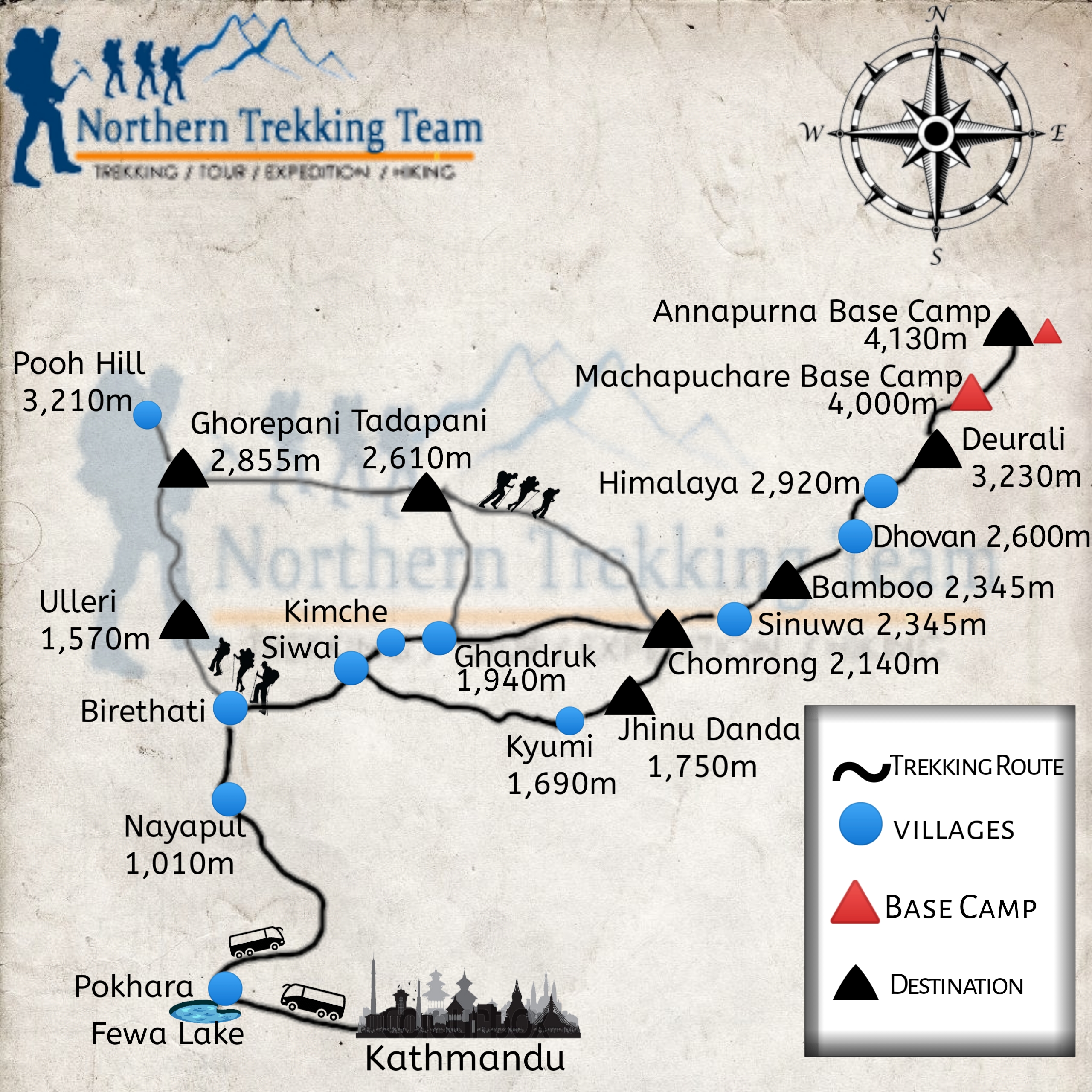
The Annapurna Panorama Trek is a lower-altitude route through the Annapurna Conservation Area, typically running 4 to 11 days depending on the itinerary you choose. The trail usually starts with a drive from Pokhara to Nayapul or Birethanti, climbs through Ulleri and Ghorepani, and reaches its highlight at Poon Hill (3,210m) before looping back down through villages like Tadapani, Ghandruk, or Landruk. Along the way, you'll pass through thick forests of rhododendron, pine, and bamboo, cross mountain streams, and spend nights in cozy teahouses run by local Gurung and Magar families.
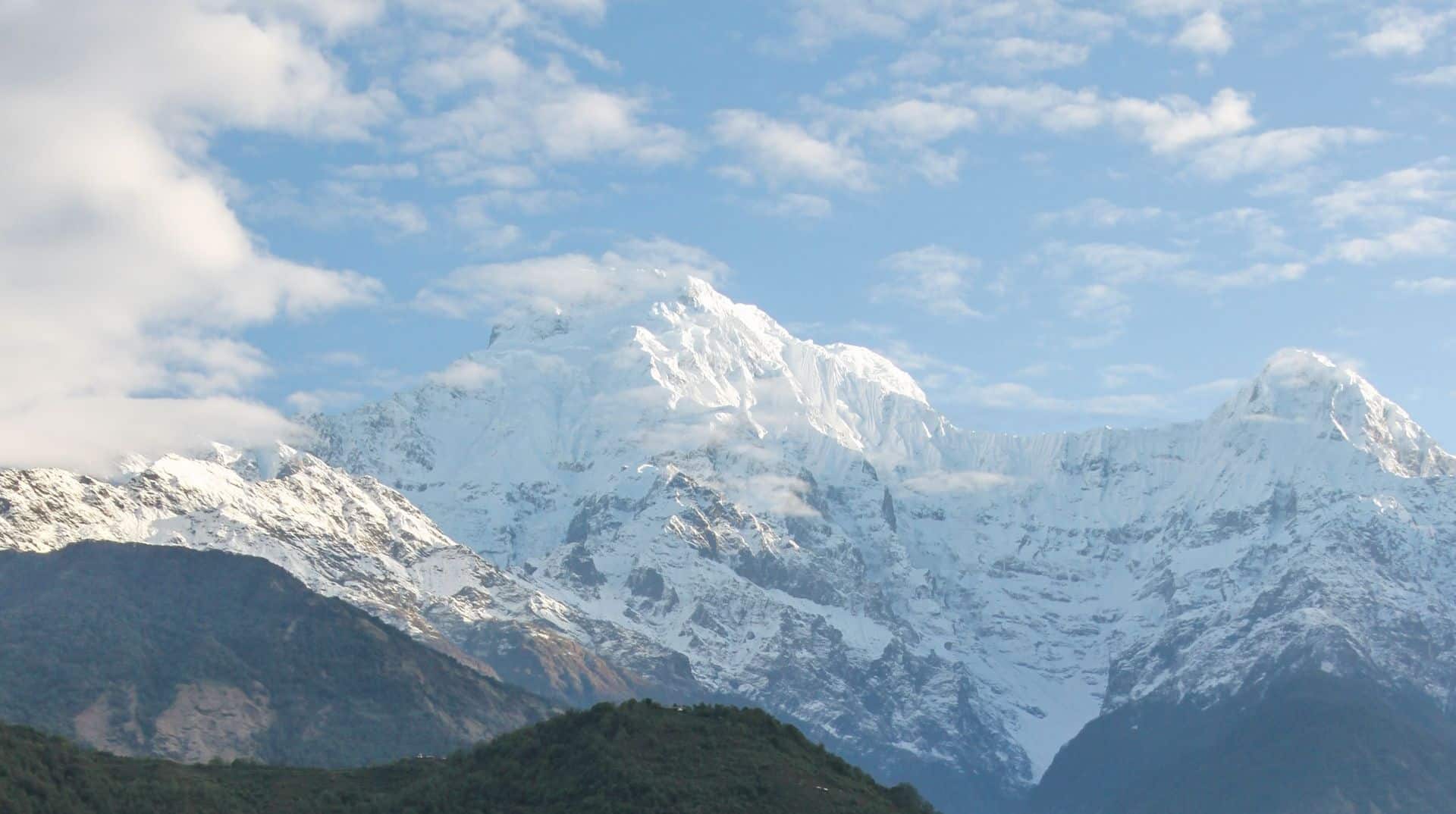
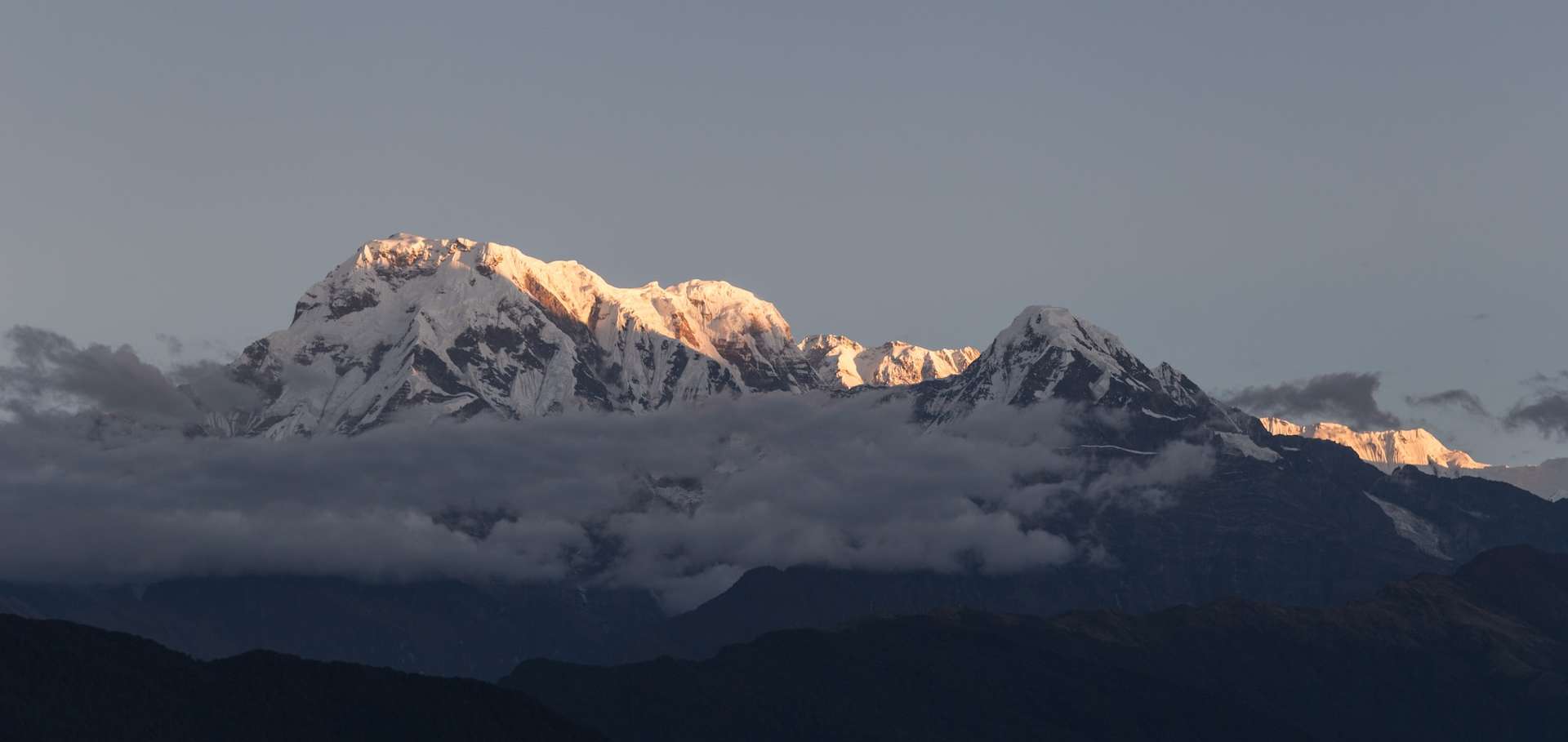
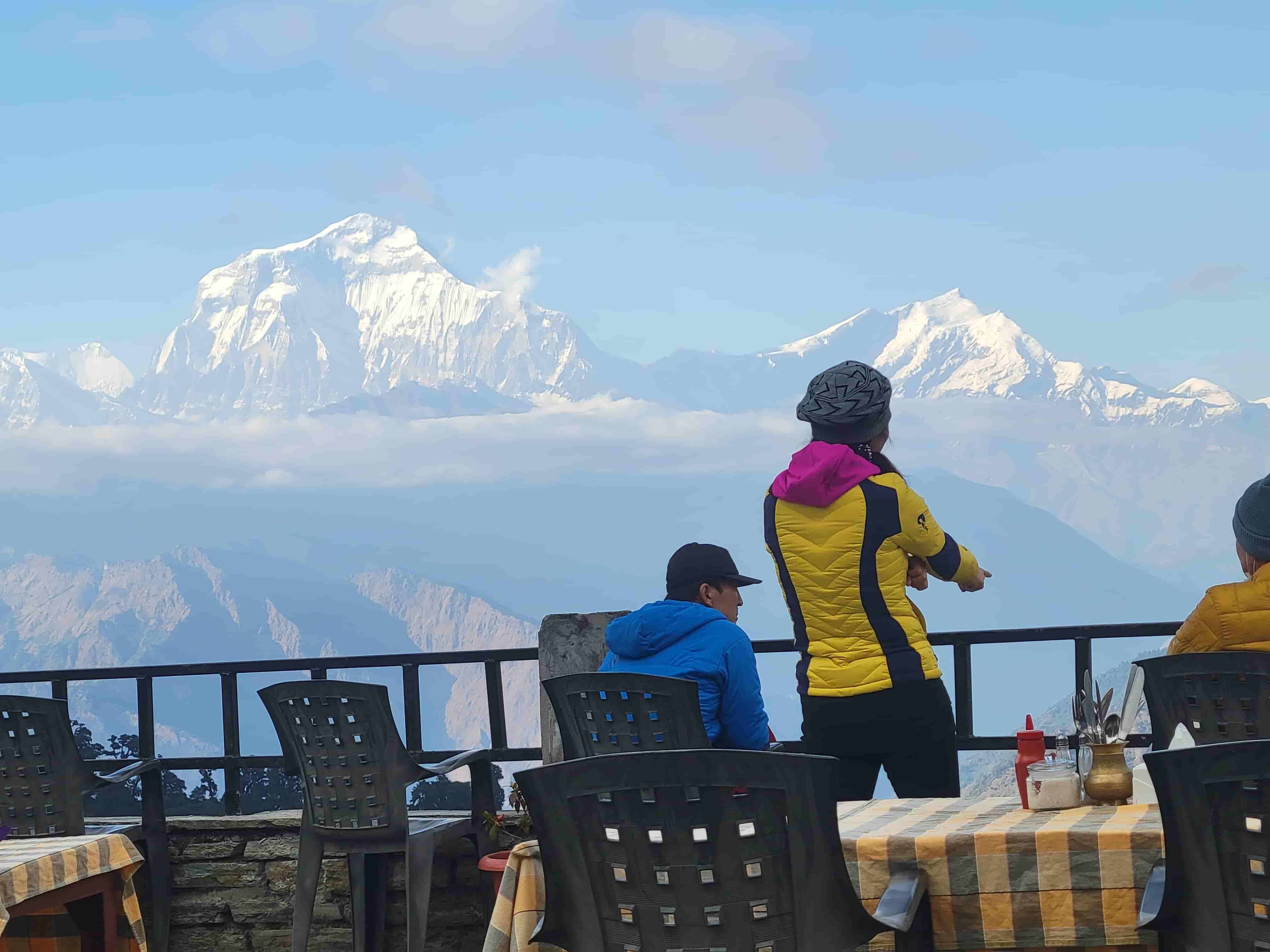
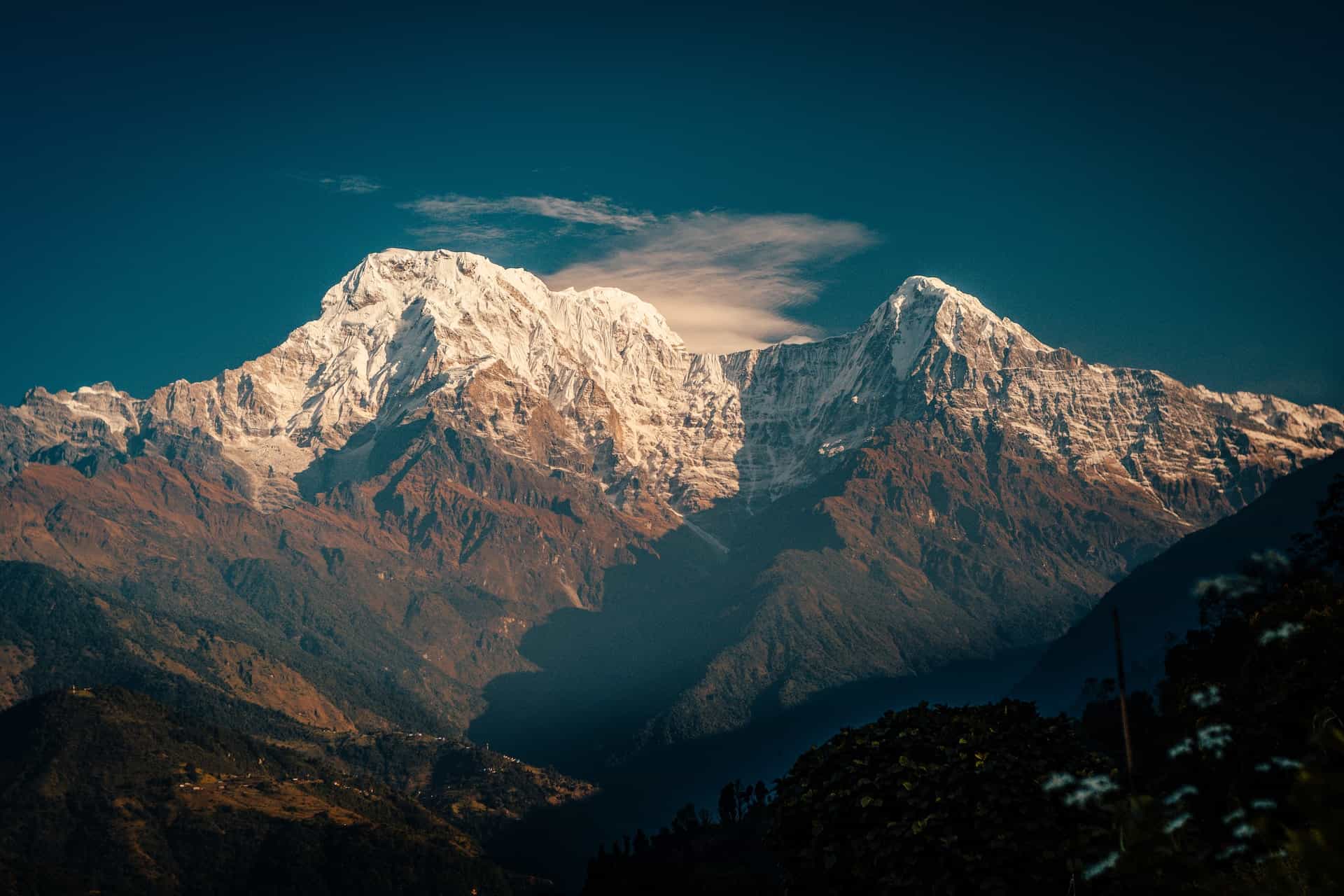
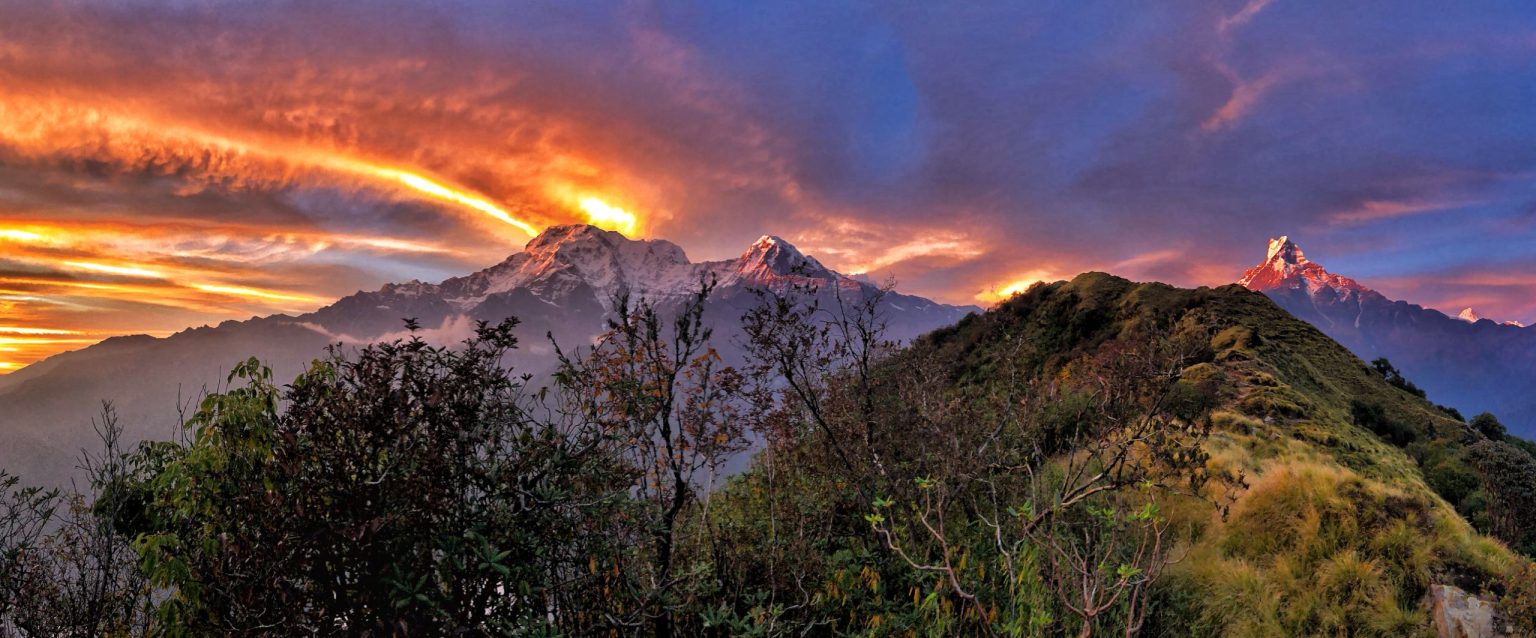
The centerpiece of the trek is the sunrise from Poon Hill, widely considered one of the most photographed views in Nepal — a sweeping panorama that takes in Annapurna I, Annapurna South, Dhaulagiri, Nilgiri, Hiunchuli, and the fishtail peak of Machhapuchhre, all catching first light at once.
How Difficult Is the Annapurna Panorama Trek?
This is where the Panorama Trek really stands apart from treks like Annapurna Base Camp or Everest Base Camp: it's graded easy to moderate, with a maximum elevation of around 3,210m at Poon Hill — well below the altitude where serious altitude sickness typically becomes a concern. Most itineraries involve about 5–6 hours of walking per day on established trails, with teahouse lodging the whole way, making it accessible to beginners, families with older children, and even seniors in decent shape.
That said, "easy" is relative to the Himalayas. The stretch from Ulleri to Ghorepani in particular involves a long, steep set of stone steps that can be tough on the legs regardless of altitude. Expect a workout on the climbs, but nothing that requires prior mountaineering experience or technical skill — just reasonable cardiovascular fitness and sturdy footwear.
Because there's minimal altitude-sickness risk and the trail is well-established with lodges at every stage, this trek is frequently recommended as an ideal introduction to Himalayan trekking, or a shorter add-on for travelers who don't have the 2+ weeks needed for Annapurna Base Camp or the Annapurna Circuit.
Annapurna Panorama Trek Permits
Unlike Upper Mustang, the Annapurna Panorama Trek does not require a Restricted Area Permit — it falls entirely within the standard Annapurna Conservation Area, so the paperwork is much simpler. You'll need two permits:
1. Annapurna Conservation Area Permit (ACAP)
This is the primary permit for the region, funding conservation and local development projects throughout the Annapurna Conservation Area. It costs NPR 3,000 (roughly USD 22–25) for foreign nationals, and can now be pre-paid online through the NTNC's e-permit portal, or arranged the traditional way at the Nepal Tourism Board office in Pokhara or Kathmandu.
2. TIMS Card (Trekkers' Information Management System)
The TIMS card costs NPR 2,000 (about USD 17) and is officially required across popular Annapurna routes, including the Ghorepani–Poon Hill trail. Together, ACAP and TIMS come to roughly NPR 5,000, or about USD 38 per person.
A few practical notes:
- Since April 2023, regulations require a licensed guide to accompany trekkers in the Annapurna Conservation Area, and permits are processed through a registered trekking agency — though enforcement on the ground has been inconsistent in practice.
- Permits are checked at trailhead checkpoints like Birethanti, so bring your passport and passport photos, and carry cash in Nepali rupees, as permit counters typically don't accept cards.
- If you book with a licensed trekking agency, both ACAP and TIMS are usually arranged for you as part of the package, so you skip the queue entirely.
Annapurna Panorama Trek Cost
Because it's shorter, lower-altitude, and doesn't require the expensive restricted-area fees of treks like Upper Mustang, the Annapurna Panorama Trek is one of the most budget-friendly quality trekking experiences in Nepal. A realistic all-in budget — including permits, guide, accommodation, meals, tips, visa, and insurance — typically runs USD 450 to 900 per person, with most standard 9–11 day guided packages starting around USD 770–870.
What a typical package includes:
- ACAP and TIMS permits
- A licensed guide (and often a porter, especially on longer itineraries)
- Teahouse/lodge accommodation along the trail
- Meals during the trek (breakfast, lunch, and dinner)
- Ground transport between Kathmandu, Pokhara, and the trailhead
What's usually not included: international flights, Kathmandu hotel nights before/after the trek, travel insurance, alcoholic drinks, hot showers, and device charging on the trail (budget a few extra dollars per day for these).
Given how straightforward the logistics are compared to remote treks, most trekkers find that a well-run guided package delivers better value than trying to arrange permits, guides, and lodging independently — particularly since permit and guide costs are similar either way.
Best Season for the Annapurna Panorama Trek
The Panorama Trek is trekkable for much of the year thanks to its relatively low elevation, but two seasons stand out as ideal:
Spring (March–May)
Spring is one of the most popular times to trek this route. Daytime temperatures at lower elevations typically sit between 10–20°C, with cooler air higher up, and skies are generally clear enough for excellent mountain views. This is also when the rhododendron forests burst into bloom, turning the trail into a corridor of red, pink, and white blossoms — arguably the trek's most photogenic season. The tradeoff is that spring is also the busiest time on the trail, so expect more company at teahouses and viewpoints.
Autumn (September–November)
Autumn offers similarly stable weather with crisp, clear skies and comfortable temperatures, making it the other top choice for this trek. Many operators rate spring and autumn as roughly equal for scenery and comfort, so choosing between them often comes down to whether you'd rather see the rhododendrons in bloom (spring) or avoid the peak crowds (autumn tends to be marginally quieter, though still popular).
Winter (December–February)
Because the maximum altitude on this trek stays around 3,210m, winter is more forgiving here than on high-altitude routes — some operators even list December through February as viable, with cold but clear conditions. Expect chilly mornings and nights, especially around Ghorepani and Poon Hill, so pack accordingly.
Monsoon (June–August)
Monsoon rains typically begin in June and continue into early September, bringing daily rainfall, leeches on the lower forested sections, and clouded-over mountain views. This is generally the least recommended season for this particular trek, since the panoramic payoff at Poon Hill depends heavily on clear skies.
Bottom line: Spring (March–May) for blooming rhododendrons and reliably clear mountain views, autumn (September–November) for similarly great weather with slightly fewer crowds, and avoid the monsoon months if the Poon Hill sunrise view is your main goal.
Annapurna Panorama Trek Cost, Permits, Difficulty & Best Season: FAQs
1. How much does the Annapurna Panorama Trek cost overall?
A realistic all-in budget — including permits, guide, accommodation, meals, tips, visa, and insurance — typically runs USD 450 to 900 per person, with most standard 9–11 day guided packages starting around USD 770–870.
2. What permits do I need for this trek?
You need two permits: the Annapurna Conservation Area Permit (ACAP), costing NPR 3,000 (about USD 22–25), and the TIMS card, costing NPR 2,000 (about USD 17). Together they come to roughly NPR 5,000, or about USD 38 per person. No Restricted Area Permit is required, unlike Upper Mustang.
3. How difficult is the Annapurna Panorama Trek?
It's graded easy to moderate, with a maximum elevation of around 3,210m at Poon Hill — well below the range where altitude sickness is a serious concern. Most days involve 5–6 hours of walking on established trails, making it accessible to beginners and families.
4. Is prior trekking experience required?
No. The trail is well-established with teahouse lodging throughout, and doesn't require technical skill or mountaineering experience — just reasonable fitness. The steep stone stairway between Ulleri and Ghorepani is the toughest physical stretch, but it's a fitness challenge, not a technical one.
5. Do I need a guide?
Since April 2023, regulations require a licensed guide for trekking in the Annapurna Conservation Area, with permits processed through a registered agency — though enforcement on the ground has been inconsistent. Booking with an agency means your guide and permits are arranged together.
6. Where do I get my permits?
ACAP can now be pre-paid online through the NTNC's e-permit portal, or obtained in person at the Nepal Tourism Board office in Pokhara or Kathmandu. TIMS is issued through a registered trekking agency. If you book a package, both are usually handled for you.
7. What's the best season to trek?
Spring (March–May) and autumn (September–November) are the two top choices, both offering clear skies and comfortable temperatures. Spring adds blooming rhododendron forests but draws bigger crowds; autumn is similarly scenic with marginally fewer trekkers on the trail.
8. Can I do this trek in winter?
Yes, more so than on high-altitude routes. Because the trek tops out around 3,210m, some operators list December–February as viable, though expect cold mornings and nights, especially around Ghorepani and Poon Hill.
9. Should I avoid trekking during monsoon season?
Generally, yes. Monsoon rains run roughly June through early September, bringing daily rainfall, leeches on the lower forested sections, and clouded-over mountain views — which undercuts the main reason most people do this trek: the Poon Hill panorama.
10. How many days does the trek take?
Itineraries range from about 4 to 11 days depending on the route and pace, with the classic Ghorepani/Poon Hill loop achievable in as little as 4–5 days, and longer versions extending through villages like Tadapani, Ghandruk, or Landruk for a fuller experience.
Planning Your Trek
With low altitude risk, simple permitting, and a well-developed teahouse trail, the Annapurna Panorama Trek is about as approachable as Himalayan trekking gets — but a good local guide still makes a real difference in comfort, pacing, and cultural context along the way. If you're ready to plan your route, Northern Trekking Team's Annapurna Panorama Trek page is a solid place to look at itineraries and get your permits sorted.
Trekking permit costs and regulations in Nepal are subject to change. Always confirm current requirements with your trekking agency before booking.
Recent From Annapurna Panorama Trek Cost, Permits, Difficulty & Best Season: Complete Guide
Jun 27, 2022
Jun 27, 2022

Jul 19, 2022
Sep 20, 2025
Jan 03, 2023
Feb 03, 2023
Feb 17, 2023
Feb 23, 2023
Mar 03, 2023
Mar 14, 2023
Mar 20, 2023
Mar 28, 2023
Apr 06, 2023
Jul 31, 2023
Aug 28, 2023

Jan 04, 2026


Mar 10, 2026
Mar 10, 2026



Apr 03, 2026
Sep 10, 2026