
21st Sep, 2026
Mera Peak Climbing Tips: Preparation, Training, Gear & Summit Guide
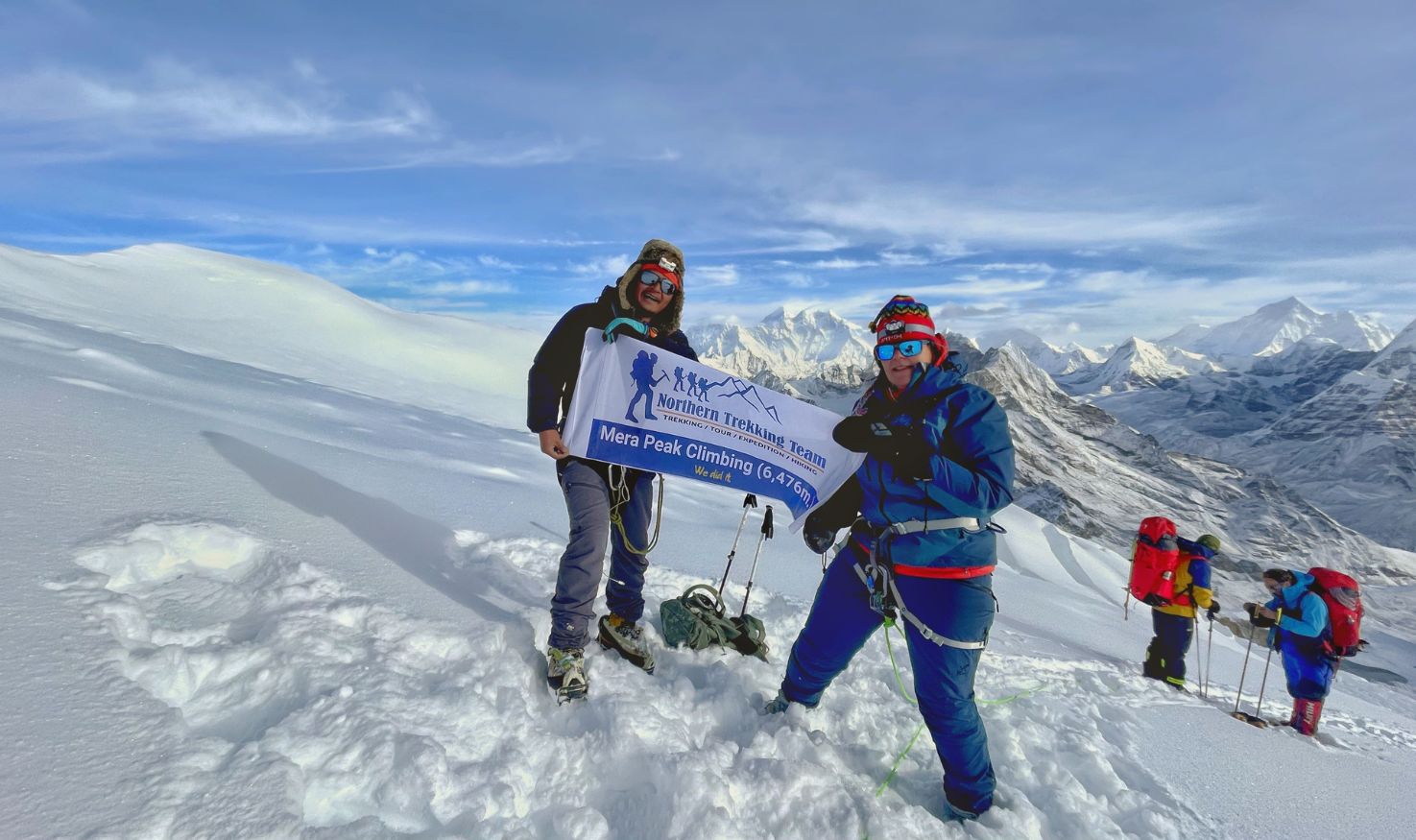
At 6,476 m, Mera Peak is widely regarded as the highest trekking peak in Nepal. It is also one of the most rewarding first 6,000 m climbs in the Himalayas. The route is non-technical compared with harder peaks. You walk on glaciers, wear crampons and use a rope, but you do not need years of climbing experience. What you do need is fitness, patience with altitude and the right preparation.
Table of Contents
The summit gives you a panorama few climbs can match. On a clear day you can see five of the world's six highest mountains: Everest, Lhotse, Makalu, Cho Oyu and Kanchenjunga.
Preparation is what decides whether you reach that view. Most climbers who fall short of the top are stopped by altitude, cold, fatigue or poor planning, not by technical difficulty. This guide covers how to train, what to pack, how to acclimatize and how summit day works. If you want to see a real 15-day schedule with dates and pricing while you read, our operator's Mera Peak Climbing itinerary has everything.
Mera Peak at a Glance
| Detail | Information |
|---|---|
| Summit altitude | 6,476 m (21,246 ft) |
| Location | Hinku Valley, Everest / Makalu region, Nepal |
| Classification | Trekking peak (Nepal Mountaineering Association) |
| Duration | Around 15 days, Kathmandu to Kathmandu |
| Grade | Hard (high altitude, moderate technical skill) |
| Best seasons | Spring (March–May), autumn (September–November) |
| Accommodation | Teahouses and lodges, then tented camps near the summit |
| Start / finish | Lukla (by flight from Kathmandu) |
| Summit day | Roughly 8–9 hours of climbing, plus the descent |
| Guide | Licensed climbing guide required |
Is Mera Peak Right for You?
Mera is often called a "beginner's" 6,000 m peak. That is fair in a technical sense, but it can mislead people about how hard it is.
What makes it easier than most peaks:
- The terrain is mostly glacier walking, with a steeper snow slope near the top.
- Basic skills are taught before the climb.
- The route is well established, with experienced guides and staff.
What makes it hard:
- You sleep above 5,000 m for several nights.
- Summit day is long, cold and exhausting.
- Facilities are basic, and comfort drops with altitude.
- Weather can change quickly, and wind is a constant factor.
You are a good candidate if:
- You are in good health and enjoy multi-day hiking.
- You have some previous trekking experience, ideally above 4,000 m.
- You can commit to 12 weeks or more of training.
- You are prepared for cold, basic accommodation and a physically demanding schedule.
If you have never trekked at altitude, consider starting with a shorter Himalayan trek first, or add extra days to your itinerary.
How to Prepare: A Timeline
| When | What to do |
|---|---|
| 4–6 months before | Choose your season and operator. Book flights and reserve your place. Check your passport is valid for at least six months. |
| 3–4 months before | Start your training plan. Visit your doctor for a health check and discuss altitude. |
| 2–3 months before | Buy or test your boots, layers and sleeping bag. Book travel insurance that covers high-altitude climbing and helicopter evacuation. |
| 1 month before | Do your longest training hikes with a loaded pack. Finalize your gear list and vaccinations. |
| 1–2 weeks before | Taper training. Rest, sleep well and pack carefully. |
| In Kathmandu | Attend your briefing, check gear and rent what you need. Keep a spare day in case of flight delays. |
Mera Peak Training Plan
A structured 12–16 week plan gives you the best chance of enjoying the trip. Your training should build endurance, leg strength and mental resilience.
The Four Pillars of Training
- Cardio endurance. Running, cycling, swimming or fast walking, 3–4 sessions a week. Aim to build up to 60–90 minutes.
- Strength. Squats, lunges, step-ups, deadlifts and core work twice a week. Strong legs make the long descent easier on your knees.
- Loaded hiking. One long hike a week, gradually increasing to 6–8 hours with a 8–10 kg pack. Hill or stair work is ideal.
- Back-to-back days. Hike two days in a row to train your body for repeated long days.
Sample 12-Week Progression
| Weeks | Focus | Typical week |
|---|---|---|
| 1–4 | Base fitness | 3 cardio sessions (40–60 min), 2 strength sessions, 1 hike of 2–3 hours |
| 5–8 | Build endurance | 4 cardio sessions (60–75 min), 2 strength sessions, 1 hike of 4–5 hours with pack |
| 9–11 | Peak training | 4 cardio sessions (up to 90 min), 2 strength sessions, 1 long hike of 6–8 hours, plus a second hike the next day |
| 12 | Taper | Light cardio, mobility work and rest |
Extra Tips for Training
- Train in your boots. Blisters ruin trips. Break your boots in fully before you leave.
- Practice with trekking poles, especially on descents.
- Train your breathing with steady, controlled effort. Do not sprint on training hikes.
- Practice eating and drinking on the move. You will need to do both when you are tired and cold.
- Spend time at altitude if you can. Even a weekend above 2,500 m can help you understand how your body responds.
- Include mental preparation. Long, cold, uncomfortable days are part of the challenge.
Essential Skills to Practice
Your guide will teach the basics at Khare, but arriving with some familiarity saves energy and builds confidence.
- Walking in crampons. Wide, steady steps, with your feet clear of the opposite trouser leg.
- Using an ice axe. Holding it correctly and self-arresting on a slope.
- Using a jumar (ascender) on a fixed rope.
- Clipping into ropes and harness use. Always check your harness is doubled back.
- Rope team travel. Keeping the rope taut and moving in rhythm with your partner.
If you can practice at a local climbing gym or on a snowy hill, do so. It is not required, but it helps.
Best Time to Climb Mera Peak
| Season | Conditions | Notes |
|---|---|---|
| Spring (March–May) | Warmer temperatures, longer days, stable weather | Popular and busier. Higher climbing permit fees. |
| Autumn (September–November) | Clear skies, crisp air, excellent visibility | Very popular, cold at night, typically the best views. |
| Winter (December–February) | Very cold, heavy snow possible | Fewer operators. Only for experienced climbers. |
| Monsoon (June–August) | Rain, cloud and poor visibility | Not recommended. |
If you are flexible, October and late April to May are usually the most reliable windows. Whatever the date, mountain weather is unpredictable, so build in a spare day.
Mera Peak Climbing Permits and Costs
Mera Peak is a trekking peak, so you need several permits. Your agency arranges them, since climbing permits are issued only through registered agencies.
Permits You Need
| Permit | Approximate cost | Notes |
|---|---|---|
| NMA climbing permit | Varies by season | The largest single fee |
| Sagarmatha National Park entry | NPR 3,000 | One-time entry fee |
| Local municipality permit (Khumbu Pasang Lhamu) | NPR 2,000 | Local fee |
| TIMS card | Sources differ | Some list it, others say trekking peaks do not need it |
The Nepal Mountaineering Association revised its trekking-peak fees effective 1 September 2025. Several 2026 guides now cite about US$350 in spring and US$175 in autumn for the NMA climbing permit, while older figures were US$250 in spring, US$125 in autumn and US$70 in the winter and summer months. Some operators still quote the older rates. Always confirm the current fee with your operator when booking. Overland Trek NepalNepaltrekkingroutes
Park entry is NPR 3,000 and the Khumbu local fee is NPR 2,000, and the same source notes that a licensed high-altitude guide is required for all groups. Self-guided attempts are not allowed. Next Trip Nepal
Overall Cost
Costs vary widely by operator, season and service level. Our operator's 15-day departures are listed from US$2,199 per person. Check the current price and departure dates before you plan.
Typically included:
- Airport transfers and hotel nights in Kathmandu
- Flights between Kathmandu and Lukla
- Meals, teahouse and tented accommodation on the trek
- Licensed climbing guide, porters and camp staff
- Climbing permits and park fees
- Group climbing gear such as crampons, ice axe, harness, helmet, ropes and carabiners
- Climbing training at Khare or base camp
- First-aid kit, and sleeping bag and down jacket on request
Typically not included:
- International flights and Nepal visa
- Travel and evacuation insurance
- Personal clothing and equipment
- Meals in Kathmandu outside the itinerary
- Drinks, hot showers, charging, Wi-Fi and snacks
- Tips for guides and porters
Mera Peak Gear Guide
The right gear is critical, especially for warmth at high camp and on summit day, where temperatures can fall well below -15°C with wind. Many items can be rented in Kathmandu.
Clothing System
Use layers so you can adjust to changing conditions.
| Layer | Recommended items |
|---|---|
| Base layer | Thermal tops and bottoms (2 sets), moisture-wicking T-shirts |
| Mid layer | Fleece jacket or soft-shell jacket, insulated pants |
| Insulation | Down jacket with hood (rated to around -20°C) |
| Outer shell | Waterproof and windproof jacket and pants |
| Hands | Thin liner gloves, warm insulated mittens or gloves |
| Head and face | Warm hat, balaclava or buff, sun hat |
| Feet | 4–6 pairs of warm socks, gaiters |
Climbing Equipment
| Item | Notes |
|---|---|
| Mountaineering boots | Must be crampon-compatible. Warm, insulated boots matter more than any other item. |
| Crampons | Must fit your boots. Usually provided or rented. |
| Ice axe | Standard mountaineering axe |
| Harness, carabiners, descender | Typically provided by your operator |
| Jumar (ascender) | For fixed-rope sections |
| Helmet | Required for climbing |
Sleeping and Carrying
- Sleeping bag rated for -20°C to -30°C, plus a liner
- Trekking backpack (50–70 L) or a duffel for porters, and a daypack (20–30 L)
- Trekking poles (adjustable)
Small Essentials
- Sunglasses with high UV protection (category 4) and glacier goggles
- Headlamp with spare batteries
- Two water bottles, plus an insulated cover
- High-SPF sunscreen and lip balm
- Personal first-aid kit and prescribed medication
- Snacks, electrolyte powder and toiletries
- Power bank and spare camera batteries (cold drains them fast)
Tips for Gear
- Test everything before you leave.
- Do not compromise on boots, gloves and sun protection. These matter most.
- Rent rather than buy for items you will use once, such as a -30°C sleeping bag or mountaineering boots.
- Keep your warm layers, goggles, water and snacks in your daypack on climb days.
The 15-Day Mera Peak Itinerary
This route follows a typical 15-day schedule with two dedicated acclimatization days.
| Day | Route | Overnight altitude |
|---|---|---|
| 1 | Arrive in Kathmandu | 1,400 m |
| 2 | Fly to Lukla, trek to Chutang | 3,020 m |
| 3 | Cross Zatrwa La (4,600 m) to Chhetrabu | 4,320 m |
| 4 | Trek to Kothe | 3,692 m |
| 5 | Trek to Thangnak | 4,358 m |
| 6 | Acclimatization day at Thangnak | 4,358 m |
| 7 | Trek to Khare | 5,045 m |
| 8 | Acclimatization and climbing training at Khare | 5,045 m |
| 9 | Trek to Mera Peak Base Camp | 5,415 m |
| 10 | Climb to High Camp | Around 5,800 m |
| 11 | Summit (6,476 m), descend to Khare | 5,045 m |
| 12 | Trek to Kothe | 3,692 m |
| 13 | Trek to Chatrabuk | 4,320 m |
| 14 | Trek to Lukla | 2,886 m |
| 15 | Fly to Kathmandu | 1,400 m |
For the full detail, see the Mera Peak Climbing page.
A Note on the Zatrwa La Route
This itinerary crosses Zatrwa La early. It is scenic and saves time, but it gains altitude quickly, from roughly 3,000 m on Day 2 to 4,320 m on Day 3. The descent to Kothe on Day 4 helps, and the rest days at Thangnak and Khare add safety. Even so, if you have never been above 4,000 m, consider a longer approach or an extra rest day. It is a small price for a much better chance at the summit.
Acclimatization Tips That Actually Work
Altitude affects everyone, regardless of fitness. Good acclimatization is the difference between reaching the summit and turning back.
- Go slowly. "Pole pole" (slowly, slowly) is the rule. If you cannot talk while walking, you are going too fast.
- Climb high, sleep low. Short hikes above your sleeping altitude on rest days improve adaptation.
- Respect rest days. Use them to hike gently, not to rush ahead.
- Drink 3-4 liters of water a day. Dehydration mimics altitude symptoms and makes them worse.
- Eat well, even when you have no appetite. Carbohydrates fuel your body at altitude.
- Avoid alcohol and sleeping pills. Both suppress breathing at night.
- Report symptoms early. Headache, nausea, dizziness, poor sleep and unusual fatigue are the first warning signs.
- Know the danger signs. Confusion, loss of balance, severe breathlessness at rest or a persistent wet cough mean you must descend immediately.
- Discuss medication with your doctor before you go.
- Be willing to turn back. The mountain will still be there next year.
Summit Day Guide: Step by Step
Summit day is the hardest and most rewarding part of the trip. Here is what to expect.
Before You Go
- Rest and eat well at High Camp. Drink plenty and go to bed early.
- Prepare your gear the night before. Layer up, check your harness, crampons and headlamp, and fill your water bottles with warm water. Insulate them so they do not freeze.
- Pack your daypack with your warm layer, spare gloves, goggles, sunscreen, snacks and water.
The Climb
- Alpine start. You typically leave in the early hours of the morning, often between 1:00 and 3:00 a.m., to reach the summit early and avoid afternoon winds.
- Slow, steady pace. The first hours are cold and dark. Keep moving, and keep your hands and feet warm.
- Glacier travel. You put on crampons and rope up, since there are crevasses. Follow your guide's steps exactly.
- The final slope. Near the top, the angle steepens. This section is usually done with a fixed rope and your jumar. Take it one step at a time.
- The summit. Reaching the top usually takes around 8-9 hours from your start point. On a clear day you will see Everest, Lhotse, Makalu, Cho Oyu and Kanchenjunga in a huge 360° view. Take photos quickly, since it is cold and windy.
The Descent
- Descend carefully. Fatigue is highest here, and many mistakes happen on the way down.
- Stay roped up on the glacier until your guide says otherwise.
- Keep eating and drinking. Summit day can be 12 hours or more, especially if you descend to Khare, as this itinerary does.
- Celebrate later. The day is not finished until you are back in camp.
Turnaround Times
Your guide will set a turnaround time. If you have not reached the summit by then, or if weather or your condition worsens, you turn around. This rule protects you. Follow it.
Common Mistakes to Avoid
- Under-training. The most common reason for struggling on Mera.
- Starting too fast. Early enthusiasm burns energy you need later.
- Poor boots. Cold or ill-fitting boots can end your climb.
- Skipping hydration. Dry air and effort dehydrate you quickly.
- Ignoring symptoms. Small problems become big ones at altitude.
- Cutting the schedule too tight. Weather delays and flight cancellations are common in Lukla. Always keep a spare day.
- Choosing an operator on price alone. Guide quality, staff ratio, equipment and safety planning matter more.
Safety on Mera Peak
- Altitude illness is the main risk. Your team should carry a first-aid kit, and your guide should be trained in altitude management.
- Crevasses are a real hazard on the glacier. Never walk unroped where your guide says to rope up.
- Cold and wind can cause frostbite. Keep your extremities covered and tell your guide if your fingers or toes go numb.
- Sun and snow glare can burn your skin and eyes. Wear goggles and reapply sunscreen.
- Insurance. Your policy must cover climbing to 6,500 m or higher and emergency helicopter evacuation. Check the policy's maximum altitude before you buy.
How to Choose a Good Mera Peak Operator
A good operator is the most important safety factor. Look for:
- Licensed, NMA-certified climbing guides with real summit experience on Mera.
- A clear acclimatization plan with rest days built in.
- Transparent inclusions and exclusions, so you know what you are paying for.
- Quality group gear in good condition.
- Reasonable group sizes and a good staff-to-climber ratio.
- Emergency planning, including first aid, communication and evacuation support.
- Real reviews from past climbers.
Frequently Asked Questions
1. How difficult is Mera Peak?
Mera Peak is a demanding high-altitude climb rather than a technically hard one. You walk on glaciers with crampons and a rope, but the main challenges are altitude, cold and long days. You sleep above 5,000 m for several nights, and summit day is long and tiring. Fitness and good acclimatization matter more than climbing skill.
2. Do I need previous climbing experience?
Not much. Your guide teaches the basics of crampons, ice axe, harness and jumar use before the climb. Previous trekking experience above 4,000 m is strongly recommended, because it shows how your body responds to altitude. If you have never been that high, consider a shorter Himalayan trek first or add extra days to your itinerary.
3. How high is Mera Peak?
Mera Peak's main summit is 6,476 m (21,246 ft). It is widely regarded as the highest trekking peak in Nepal. On a clear day the summit view includes Everest, Lhotse, Makalu, Cho Oyu and Kanchenjunga.
4. How long does the Mera Peak climb take?
A typical schedule is 15 days from Kathmandu to Kathmandu, including two acclimatization days and one summit day. Summit day itself is around 8-9 hours of climbing, plus the descent. Some itineraries add spare days for weather or acclimatization. You can see a full example on the Mera Peak Climbing page.
5. What is the best time to climb Mera Peak?
The best seasons are spring (March to May) and autumn (September to November). Spring is warmer, with longer days. Autumn brings clear skies and excellent visibility. Winter is very cold with heavy snow, and the monsoon (June to August) brings rain and poor views, so both are less suitable.
6. How should I train for Mera Peak?
Start 12-16 weeks before your trip. Build a plan around four pillars:
- Cardio endurance, 3-4 sessions a week
- Leg and core strength, twice a week
- A weekly long hike, building up to 6-8 hours with an 8-10 kg pack
- Back-to-back hiking days to prepare for repeated long days
Train in your own boots, use trekking poles and practice eating and drinking on the move.
7. How do I avoid altitude sickness on Mera Peak?
Altitude affects everyone, regardless of fitness. To reduce your risk:
- Walk slowly and steadily
- Follow the "climb high, sleep low" principle
- Respect the rest days
- Drink 3-4 liters of water a day
- Avoid alcohol and sleeping pills
- Report symptoms early
Headache, nausea, dizziness and unusual fatigue are early warnings. Confusion, loss of balance or breathlessness at rest mean you must descend immediately. Ask your doctor about preventive medication before you go.
8. What permits do I need, and how much do they cost?
You need an NMA climbing permit, Sagarmatha National Park entry (NPR 3,000) and a local municipality fee (NPR 2,000). Sources differ on whether a TIMS card is needed for trekking peaks. The NMA revised its fees from 1 September 2025, and several 2026 guides cite about US$350 in spring and US$175 in autumn, while older figures were lower. Always confirm the current rate with your operator. Climbing permits are issued only through registered agencies, and your agency arranges them.
9. How much does it cost to climb Mera Peak?
Costs vary by operator, season and service level. Our operator's 15-day departures are listed from US$2,199 per person, so check the current price and dates before you plan. This typically covers permits, guide and porters, accommodation, meals, domestic flights and group climbing gear. It does not cover international flights, your visa, insurance, personal gear, drinks, or tips.
10. What gear do I need, and can I rent it?
The essentials are:
- Insulated, crampon-compatible mountaineering boots
- Layered clothing, including a down jacket rated to about -20°C
- Insulated gloves or mittens
- A sleeping bag rated to -20°C to -30°C
- Glacier goggles and high-UV sunglasses
- A headlamp and trekking poles
Boots, sleeping bags, down jackets and climbing gear can be rented in Kathmandu, and many operators provide group climbing equipment. Do not compromise on boots, gloves and sun protection.
11. What is summit day like?
You typically leave High Camp in the early hours, often between 1:00 and 3:00 a.m., to reach the top before afternoon winds. You wear crampons, rope up for glacier travel and use a fixed rope with a jumar on the steeper final slope. Reaching the summit takes around 8-9 hours. The descent, especially if you continue down to Khare as in the 15-day itinerary, can make the total day 12 hours or more.
12. Do I need supplemental oxygen?
Most climbers do not use supplemental oxygen on Mera Peak. The altitude is high, but manageable with good acclimatization. Ask your operator what emergency oxygen, oximeters and first-aid equipment the team carries.
13. Is Mera Peak harder than Island Peak?
They are often compared. Mera is higher and involves more days at altitude, but its climbing is generally less steep. Island Peak is lower but has a steeper headwall near the top. Many climbers find them similar in overall challenge, and Mera is often chosen as a first 6,000 m peak.
14. What insurance do I need?
Buy travel insurance that covers high-altitude climbing to at least 6,500 m and emergency helicopter evacuation, plus medical treatment and repatriation. Check the policy's maximum altitude and whether it treats a trekking peak as mountaineering. Many standard policies do not cover it.
15. What if bad weather or a flight delay disrupts my schedule?
Weather can delay Lukla flights and affect summit day. Build a spare day or two into your schedule, and avoid tight international connections after the trip. Your guide sets a turnaround time on summit day, and if conditions worsen, you turn back. It is the safest approach, and the mountain will still be there next season.
Conclusion
Mera Peak is one of the best ways to experience high-altitude climbing in the Himalayas. It combines remote valleys, glacier travel and a summit with views of five of the world's tallest peaks. Preparation is everything: train for months, test your gear, respect your acclimatization and listen to your guide.
If you want to turn the plan into a booking, review the full schedule, inclusions and upcoming departures on the Mera Peak Climbing page, or contact the team with your questions about season, fitness and gear.
Recent From Mera Peak Climbing Tips: Preparation, Training, Gear & Summit Guide
Jun 27, 2022
Jun 27, 2022

Jul 19, 2022
Sep 20, 2025
Jan 03, 2023
Feb 03, 2023
Feb 17, 2023
Feb 23, 2023
Mar 03, 2023
Mar 14, 2023
Mar 20, 2023
Mar 28, 2023
Apr 06, 2023
Jul 31, 2023
Aug 28, 2023

Jan 04, 2026


Mar 10, 2026
Mar 10, 2026

