22nd Nov, 2026
Yala Peak Climbing: Altitude, Acclimatization & Safety Tips
Yala Peak is one of the most rewarding first Himalayan summits in Nepal. It is also high enough to be taken seriously. The route climbs from the forests of Syabrubesi at roughly 1,500 m to a summit of about 5,500 m in under a week, and the thin air is what turns back more climbers than the terrain does.
Table of Contents
This guide covers the altitude profile, how to acclimatize properly, how to recognize altitude sickness, and the safety habits that make a summit realistic. It applies whether you are a first-time climber or an experienced trekker moving up to peak climbing.
Looking for a ready-made plan? See the 12-day Yala Peak Climbing itinerary from Northern Trekking Team.
Yala Peak at a Glance
| Detail | Information |
|---|---|
| Region | Langtang National Park, Nepal |
| Summit altitude | About 5,500 m (18,000 ft). Some sources list higher figures |
| Base camp | Around 4,600–4,800 m |
| Starting point | Syabrubesi (about 1,500 m), reached by road from Kathmandu |
| Typical duration | 10–14 days |
| Best seasons | March–May and September–November |
| Main risk | Altitude sickness, cold and weather |
Understanding Altitude on Yala Peak
Altitude affects everyone the same way: the higher you go, the less oxygen each breath delivers. At 3,500 m you get roughly two-thirds of the oxygen available at sea level. Near the summit, it is closer to half.
Your body adapts by breathing faster, producing more red blood cells and adjusting its chemistry. This takes days, not hours, which is why acclimatization matters more than strength or fitness.
Yala Peak Altitude Profile (12-Day Itinerary)
Here is how the climb unfolds on a typical 12-day schedule:
| Day | Location | Approx. altitude |
|---|---|---|
| 1–2 | Kathmandu | 1,400 m |
| 3 | Syabrubesi | 1,550 m |
| 4 | Lama Hotel | 2,380 m |
| 5 | Langtang Village | 3,432 m |
| 6 | Kyanjin Gompa | 3,830 m |
| 7 | Rest day, Tserko Ri hike | 5,000 m (day hike) |
| 8 | Yala Peak Base Camp | 4,700 m |
| 9 | Summit, then back to Kyanjin Gompa | 5,500 m |
| 10 | Lama Hotel | 2,380 m |
| 11 | Syabrubesi | 1,550 m |
| 12 | Drive to Kathmandu | 1,400 m |
Two sections deserve attention:
- Day 4 to Day 5: A gain of roughly 1,000 m in one day, from Lama Hotel to Langtang Village. This is the first stretch where mild symptoms can appear.
- Day 6 to Day 8: From Kyanjin Gompa to base camp is a gain of about 870 m in sleeping altitude, spread over a rest-and-hike day. Climbers who feel slow here should tell their guide early. If you want extra margin, ask about adding a day at Kyanjin Gompa or Yala Kharka.
You can view the full altitude chart on the Yala Peak Climbing trip page.
Acclimatization: The Key to a Successful Summit
The Golden Rules
- "Climb high, sleep low." Day hikes to higher ground, followed by sleeping lower, are the most effective acclimatization method. Tserko Ri (around 5,000 m) from Kyanjin Gompa is the classic example.
- Above about 3,000 m, aim to gain no more than 400–500 m of sleeping altitude per day. This is a widely used guideline, not an exact rule.
- Take a rest day for roughly every 1,000 m gained. The Kyanjin Gompa rest day serves this purpose.
- Walk slowly. If you cannot speak full sentences while walking, you are going too fast.
- Never skip the acclimatization day, even if you feel strong.
Why the Rest Day at Kyanjin Gompa Matters
Kyanjin Gompa (about 3,830 m) is the staging point for the climb. Use the rest day for a short hike to Tserko Ri or a nearby ridge, then return to sleep at the village. A good night's sleep at this altitude is a strong sign that your body is adjusting well.
Daily Habits That Help Your Body Adapt
- Hydrate: Aim for roughly 3–4 litres of fluids per day, including tea and soup.
- Eat well: Carbohydrate-rich meals help, even if your appetite drops.
- Avoid alcohol and be careful with sleeping pills, which can suppress breathing at night.
- Dress in layers and stay warm, since cold stresses the body.
- Sleep and rest more than you think you need to.
For more on this topic, read the altitude tips from Northern Trekking Team and their guide to Acute Mountain Sickness.
Altitude Sickness on Yala Peak: Know the Signs
Altitude illness is the most serious risk on this climb. It falls into three categories.
Acute Mountain Sickness (AMS)
The most common form, and usually mild if caught early.
Symptoms:
- Headache (the most common sign)
- Nausea or loss of appetite
- Dizziness
- Unusual tiredness
- Poor sleep
What to do: Stop ascending, rest, drink fluids and tell your guide immediately. If symptoms get worse, descend.
High-Altitude Cerebral Edema (HACE)
A life-threatening swelling of the brain.
Warning signs:
- Severe headache that does not respond to rest or medication
- Confusion or strange behavior
- Loss of coordination, such as stumbling or difficulty walking in a straight line
- Extreme drowsiness
What to do: This is an emergency. Descend immediately and arrange evacuation.
High-Altitude Pulmonary Edema (HAPE)
A life-threatening build-up of fluid in the lungs.
Warning signs:
- Breathlessness at rest
- A persistent wet or bubbling cough, sometimes with pink or frothy sputum
- Extreme fatigue and chest tightness
- Blue or gray lips
What to do: This is an emergency. Descend immediately and arrange evacuation.
Key Principle
Never ascend with worsening symptoms, and never leave someone with symptoms alone. Descent is the most effective treatment. Even 300–500 m lower can make a significant difference.
On medication such as acetazolamide (Diamox), speak to a doctor with high-altitude experience before you travel. Do not take any medication for the first time on the mountain.
Summit Day Safety on Yala Peak
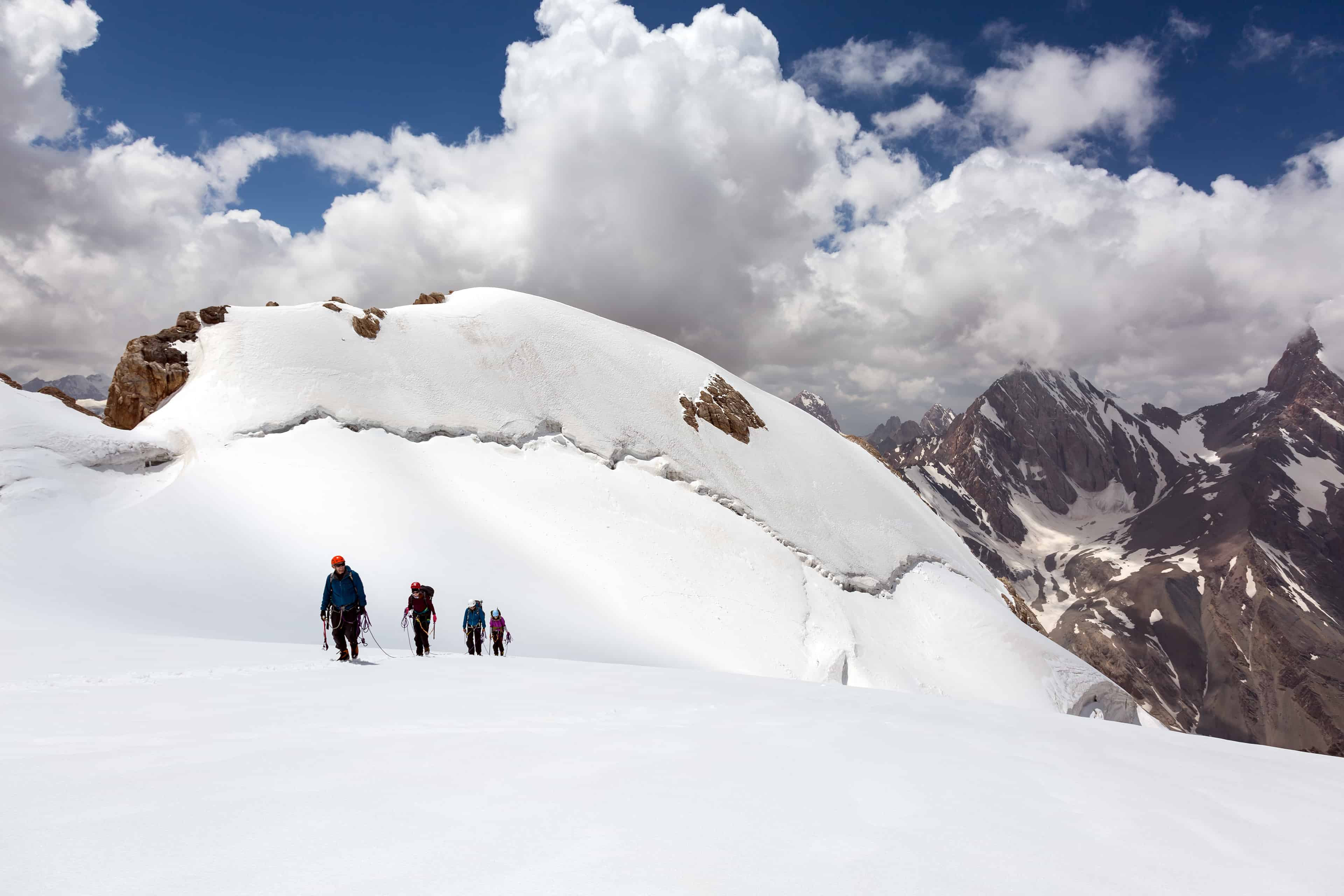
Summit day is the most demanding part of the trip. The standard route is non-technical, but you will use mountaineering equipment such as crampons and an ice axe, and you may use fixed or guide-managed ropes on steeper sections depending on conditions.
What to Expect
- Alpine start: You typically leave in the early morning hours, in darkness and freezing temperatures.
- Steep terrain: The upper slopes are steeper and require careful footwork.
- Long day: Plan for roughly 8–9 hours including the return to base camp, and the descent to Kyanjin Gompa afterwards.
- Cold and wind: Conditions can change quickly on the ridge.
Summit Day Safety Checklist
- Follow your guide's turnaround time. Reaching the summit late is a safety risk. A strict turnaround time is a sign of a good guide.
- Check the forecast and talk to your guide about snow conditions before setting out.
- Keep moving steadily, and eat and drink small amounts regularly.
- Protect your skin and eyes with sunscreen and Category 4 sunglasses. Snow blindness and sunburn are real hazards.
- Keep hands and feet warm. Frostbite can start before you notice it, so tell your guide about numbness.
- Stay roped or clipped in wherever your guide instructs.
- Wear a helmet where recommended.
- Be honest about how you feel. Turning back is a good decision, not a failure.
Weather and Best Time to Climb
- Spring (March–May): Generally stable weather, good snow conditions and warmer temperatures. Rhododendrons bloom on the lower trail.
- Autumn (September–November): Clear skies and excellent visibility after the monsoon, but colder nights.
- Winter (December–February): Very cold, with a higher risk of unstable snow.
- Monsoon (June–August): Heavy rain, poor visibility and slippery trails. Not recommended.
Mountain weather changes fast in any season, so always allow buffer days in your travel plans.
Essential Safety Gear and Preparation
Good gear protects you from cold, which compounds the effects of altitude.
Clothing
- Moisture-wicking base layers
- Fleece or soft-shell mid layer
- Down jacket rated for very cold temperatures
- Waterproof and windproof shell jacket and trousers
- Insulated gloves and liner gloves
- Warm hat, buff or balaclava, and sun hat
Climbing equipment
- Mountaineering boots compatible with crampons
- Crampons, ice axe, harness, carabiners and helmet
- Gaiters for snow
Other essentials
- Sleeping bag rated to around −20°C
- Trekking poles
- Headlamp with spare batteries
- Category 4 sunglasses, SPF 50+ sunscreen and lip balm
- Insulated water bottles
- Personal first-aid kit, including any prescribed altitude medication
Northern Trekking Team's package includes personal and group climbing gear and a climbing training session at base camp. You can check the full trekking equipment list here.
Travel Insurance: Don't Skip It
Choose a policy that covers high-altitude trekking and climbing up to at least 5,500 m, including emergency helicopter evacuation. Many standard travel policies exclude mountaineering or cap altitude at 4,000 m or lower, so read the fine print carefully. Insurance is listed as an essential, separate cost on the Yala Peak package.
Choosing a Safe Operator
A good guide is your most important safety tool. When comparing companies, ask:
- Are the guides licensed and experienced on this specific peak?
- Does the itinerary include proper acclimatization days?
- Do guides carry a first-aid kit and know how to recognize AMS, HAPE and HACE?
- What is the emergency evacuation plan?
- Is the company registered and affiliated with recognized industry bodies?
- Are group sizes and guide-to-climber ratios reasonable?
Read why climbers choose Northern Trekking Team and the safety and security guide for Nepal before you book.
Training and Fitness: Build Your Altitude Buffer
Fitness does not prevent altitude sickness, but it makes every day easier and leaves you more energy to cope.
- 8–12 weeks of cardio: hiking, running, cycling or stair climbing, building to 4–6 hour sessions
- Strength work: squats, lunges and core exercises
- Pack training: hike hills with a loaded daypack
- Back-to-back long days in the final month to simulate trekking fatigue
If you can do a multi-day trek above 3,000 m beforehand, such as the Langtang Valley Trek, that is excellent preparation.
Mistakes to Avoid
- Ascending faster than your group because you "feel fine"
- Hiding symptoms to avoid slowing the team
- Skipping the rest day
- Drinking too little water
- Using alcohol or sleeping pills at altitude
- Starting the trip with a cold or chest infection
- Buying cheap, ill-fitting boots just before the trip
- Choosing a package with no acclimatization buffer
Frequently Asked Questions
How high is Yala Peak?
The summit is generally quoted at about 5,500 m (18,000 ft), though some sources and operators list slightly higher figures. Base camp sits at roughly 4,600–4,800 m.
Is altitude sickness common on Yala Peak?
Mild symptoms are common on any trek that passes 3,500 m. Proper acclimatization and a slow pace greatly reduce the risk of serious illness.
Do I need previous high-altitude experience?
It is not required, but experience above 3,000–4,000 m helps you understand how your body responds. If you have never been that high, build in extra days.
How many acclimatization days are on the Yala Peak itinerary?
The standard 12-day plan includes a rest and hike day at Kyanjin Gompa. If you are concerned, ask your operator about adding an extra day. You can customize your trip.
What should I do if I feel unwell at altitude?
Stop climbing, tell your guide, rest and hydrate. If symptoms worsen or include confusion, loss of balance or breathlessness at rest, descend immediately.
Is Yala Peak safe for beginners?
Yes, with the right preparation. It is considered one of the more accessible peaks in Nepal, but it still demands respect for altitude, cold and weather.
What is the best season to climb Yala Peak?
Spring (March–May) and autumn (September–November) offer the most stable conditions.
How much does Yala Peak climbing cost?
Northern Trekking Team lists packages from US$1,315 per person at the time of writing. Check the Yala Peak Climbing page for current pricing and inclusions.
What other peaks can I try after Yala Peak?
Popular next steps include Mera Peak, Island Peak, Lobuche Peak and Pokalde Peak.
Final Thoughts
Yala Peak is a wonderful introduction to Himalayan climbing, with big views, a culturally rich approach through Langtang and a manageable summit day. But the mountain rewards patience. The climbers who reach the top are usually the ones who walked slowly, drank plenty, listened to their bodies and trusted their guides' decisions.
Respect the altitude, build in acclimatization, carry the right gear and be willing to turn back. The mountain will still be there.
Ready to plan your climb?
- Explore the full Yala Peak Climbing 12-day itinerary
- Book this trip or make an inquiry
- Browse more peak climbing in Nepal
- Read more guides on the Northern Trekking Team blog
- Contact the team with any questions
Medical disclaimer: this article is general information, not medical advice. Consult a doctor experienced in altitude medicine before your trip, especially if you have heart, lung or blood-pressure conditions.
Recent From Yala Peak Climbing: Altitude, Acclimatization & Safety Tips
Jun 27, 2022
Jun 27, 2022

Jul 19, 2022
Sep 20, 2025
Jan 03, 2023
Feb 03, 2023
Feb 17, 2023
Feb 23, 2023
Mar 03, 2023
Mar 14, 2023
Mar 20, 2023
Mar 28, 2023
Apr 06, 2023
Jul 31, 2023
Aug 28, 2023

Jan 04, 2026


Mar 10, 2026
Mar 10, 2026



Apr 03, 2026
Sep 10, 2026
Sep 14, 2026